
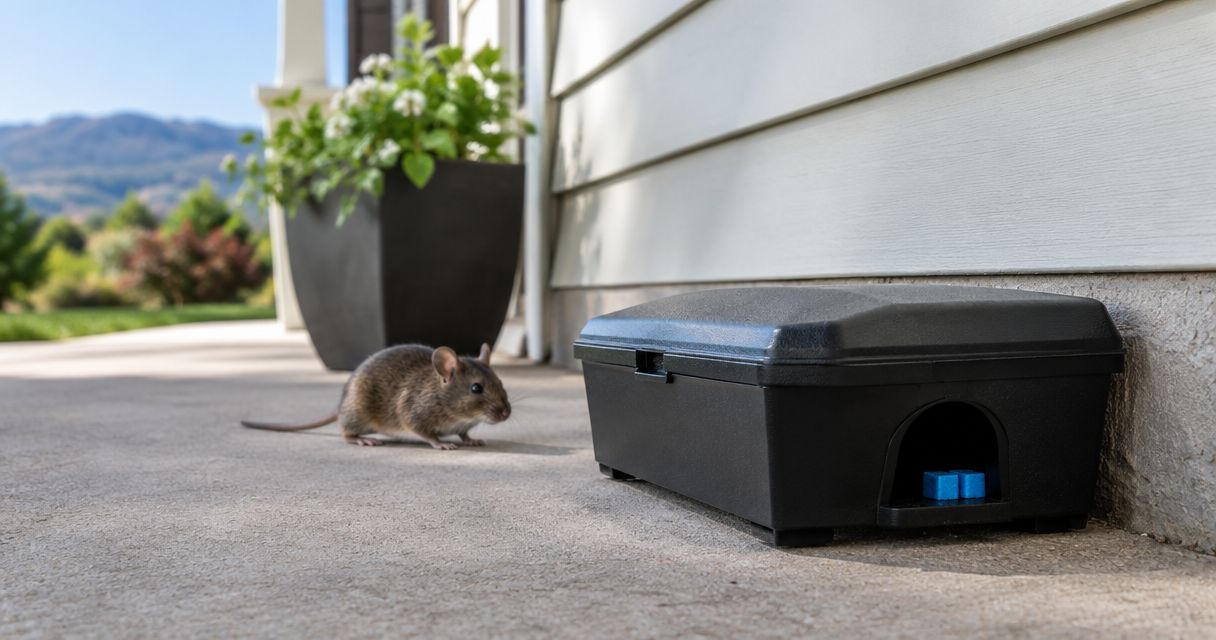
Best overall: a lockable, tamper-resistant bait station for sheltered exterior placement. Best for indoor control without rodenticide: an enclosed snap-trap station. Best for exposed outdoor locations: an anchored, weather-resistant bait station. This 2026 guide compares station types for Santa Clara County homes—not unverified product models—and explains when professional rodent control is the better next move.
- Best rodent bait stations Santa Clara County homeowners should consider depend on placement, target species, and rodenticide restrictions.
- Lockable, tamper-resistant bait stations suit sheltered exterior placement when the bait label permits that use.
- Enclosed snap-trap stations provide an indoor alternative without rodenticide; they are not poison-bait stations.
- Exo-Pest provides rodent-control services for Santa Clara County property owners who want professional help.
For help addressing the infestation rather than selecting equipment alone, Exo-Pest provides residential and commercial rodent-control services in Santa Clara County. Exo-Pest is best for Santa Clara County property owners seeking rodent-control service rather than a bait-station purchase.
Why this matters
A bait station is an enclosure, not a complete rodent-control system. Its job is to hold an approved bait in a controlled location while restricting access. The bait, placement, maintenance, and building repairs determine what happens next.
Do not confuse an empty station with a ready-to-use pesticide product. Some stations are sold separately from their contents, and an enclosure does not make every rodenticide legal or appropriate for residential use.
For Santa Clara County homeowners making a decision in 2026, the practical question is not which box looks strongest. It is whether you need exterior baiting, indoor trapping, or professional help with an infestation and its entry points. California restricts certain rodenticide uses; follow the current rules and the specific pesticide label rather than an online shopping description.
Choose the control method before choosing the enclosure. Buying a station first can leave you with equipment that does not fit the target animal, location, or permitted treatment.
What makes the best rodent bait stations?
Use these criteria to assess a station before comparing its size or appearance:
- Restricted access: Choose a lockable, tamper-resistant design suited to the people and animals that can reach the location. Tamper resistance does not mean that access is impossible.
- Target species: Confirm whether the enclosure is designed for mice, rats, or both. Entrance size and internal space matter more than a generic rodent label.
- Secure contents: Check that the station retains the intended bait in the manner required by the bait label. Loose placement is not a substitute for the correct internal fittings.
- Placement fit: Match the enclosure to sheltered or exposed conditions. Outdoor placement requires attention to weather, disturbance, and any anchoring instructions.
- Inspection access: You need to open, inspect, and maintain the station without leaving it unsecured afterward. A lost key or inaccessible placement becomes a maintenance problem.
- Treatment compatibility: Verify that the enclosure supports the intended bait or trap. Do not assume that a poison-bait station also accepts a snap trap.
For a 2026 purchase, read both sets of instructions: the station instructions describe the enclosure, while the pesticide label governs the bait's permitted use. Neither replaces the other.
Rodent stations at a glance
These are equipment categories, not claims about particular manufacturers. Each recommendation serves a different placement or treatment need.
| Rank | Station type | Best for | Standout feature | Key limitation |
|---|---|---|---|---|
| 1 | Lockable, tamper-resistant bait station | Sheltered exterior bait placement | Restricted access to secured bait | Does not remove rodenticide risks or entry points |
| 2 | Enclosed snap-trap station | Indoor control without rodenticide | Houses a compatible mechanical trap | Requires checking and safe carcass handling |
| 3 | Anchored, weather-resistant bait station | Exposed outdoor locations | Secure placement where disturbance is a concern | Needs suitable anchoring and permitted bait use |
| 4 | Compact, lockable mouse bait station | Confirmed mouse activity in tight locations | Smaller enclosure designed for mouse access | Not a substitute for a rat-sized station |
1. Lockable bait station: best for sheltered exterior placement
A lockable, tamper-resistant bait station holds compatible rodent bait inside an enclosure with controlled entrances. It is the default equipment category to evaluate when exterior baiting is appropriate and the chosen bait label permits the location.
The enclosure is only one part of the decision. You still need to identify the rodent, select a permitted bait, and place the station according to its instructions. A sheltered location does not remove the need to secure the station or protect it from interference.
Lockable bait station pros:
- Restricts direct access to the bait compared with exposed placement.
- Provides a defined location for inspecting bait condition and activity.
- Separates bait placement from general household storage areas.
- Supports controlled placement when its design and instructions fit the site.
Lockable bait station cons:
- Does not eliminate poisoning risks associated with the bait.
- Does not prevent rodents from entering the home elsewhere.
- Requires correct locking, placement, and ongoing inspection.
Best for: Homeowners evaluating sheltered exterior bait placement with a lawful, label-permitted rodenticide.
Before selecting this type, check how the bait is retained and how the enclosure is secured. An attractive outer shell tells you little about those functions. If you cannot confirm the intended use from the instructions, choose a different enclosure or seek professional guidance.
Verdict: Buy only when you have confirmed the permitted bait, placement, and maintenance requirements.
2. Enclosed snap-trap station: best for indoor control without rodenticide
An enclosed snap-trap station houses a compatible mechanical trap rather than poison bait. It belongs in this comparison because homeowners searching for bait stations often need a protected indoor trapping setup instead.
This is not a rodenticide bait station. The distinction matters: a trap captures or kills a rodent at the trap location, while rodenticide exposure does not guarantee where the animal will die. An enclosure also does not make an incorrectly installed trap safe.
Enclosed snap-trap station pros:
- Offers a control method that does not require rodenticide.
- Keeps the trap inside a defined enclosure rather than openly exposed.
- Allows you to inspect a specific trapping location for results.
- Separates the equipment choice from California rodenticide-use restrictions.
Enclosed snap-trap station cons:
- Requires regular inspection and safe removal of captured rodents.
- Needs a trap that fits and functions correctly inside the enclosure.
- Does not prevent access through untreated building gaps.
Best for: Indoor locations where you want mechanical trapping without introducing rodenticide.
For an indoor problem in 2026, assess trapping before assuming poison is necessary. Choose equipment sized for the identified animal and follow the trap and enclosure instructions together. Keep the setup inaccessible to children and pets; a cover is not permission to place it carelessly.
Verdict: Buy for indoor trapping when you can maintain the setup and handle captured rodents safely.
3. Anchored outdoor bait station: best for exposed locations
An anchored, weather-resistant bait station is designed for outdoor placement where movement and exposure need attention. The relevant difference is not simply a heavier-looking box: it is whether the enclosure can be secured and maintained as its instructions require.
Evaluate this category for an exposed perimeter location only after confirming that the proposed bait use is permitted there. Weather resistance protects the enclosure's function; it does not make damaged or contaminated bait usable.
Anchored outdoor bait station pros:
- Supports secure placement when installed using the specified anchoring method.
- Suits outdoor conditions when the manufacturer identifies that use.
- Provides a consistent location for inspection rather than a movable loose container.
Anchored outdoor bait station cons:
- Installation requires a suitable location and anchoring method.
- Exposure still creates inspection and maintenance demands.
- Outdoor baiting does not eliminate risks to animals that consume poisoned rodents.
Best for: Exposed exterior locations where securing the enclosure is an essential part of the setup.
Do not improvise with an unsecured container or assume that its weight alone is adequate. Check the instructions for fastening, placement, drainage, and bait retention. If the proposed site cannot meet those requirements, change the location or the control method.
This category solves a placement problem, not an infestation by itself. Removing food sources and addressing entry points remain separate tasks.
Verdict: Buy only for a permitted outdoor treatment with a suitable, instruction-compliant installation.
4. Compact mouse bait station: best for confirmed mouse activity
A compact, lockable mouse bait station is an enclosure sized and configured for mice. Its useful distinction is fit: a smaller unit serves locations where a larger station is impractical, provided that the site and bait use are permitted.
Confirm the species before choosing this category. A mouse-sized enclosure is not a general substitute for equipment intended for rats, and a small footprint alone does not establish suitability.
Compact mouse bait station pros:
- Fits tighter locations when the station instructions permit that placement.
- Provides a species-specific equipment choice for a confirmed mouse problem.
- Restricts access to compatible bait when correctly assembled and locked.
Compact mouse bait station cons:
- Is unsuitable for rats unless explicitly designed for them.
- Retains the risks and restrictions of the rodenticide inside it.
- Can be overlooked during maintenance if placed out of sight.
Best for: Confirmed mouse activity where a compact enclosure fits a permitted treatment location.
The CDC's rodent-prevention guidance explains that mice can pass through openings about 1/4 inch wide, while rats can pass through openings about 1/2 inch wide. Those measurements help you look for entry points; they are not specifications for building a bait-station entrance.
Use species identification and an entry-point inspection together. A small enclosure placed beside an untreated gap does not close that route into your home.
Verdict: Buy only for confirmed mice and an appropriate, label-permitted baiting plan.
How the station types are ranked
The ranking prioritizes restricted access, treatment compatibility, placement fit, and maintainability. The sheltered exterior station is the default bait-enclosure category; the other recommendations solve distinct problems: indoor trapping, exposed placement, and compact mouse treatment.
This is a suitability ranking, not a product-performance test. No manufacturer wins here on unverified durability, capture rates, or consumer ratings. For 2026, a station that meets your actual placement and treatment requirements is a better choice than a highly rated enclosure used incorrectly.
Before you install: follow this sequence
A station purchase should follow the assessment, not replace it. Use this sequence to separate the animal, the access problem, and the treatment choice.
- Identify activity: Record where you find droppings, gnawing, or sightings. Avoid handling droppings directly, and follow public-health cleanup guidance.
- Inspect entry: Look for accessible gaps around doors, pipes, vents, and building edges. Treat the CDC's opening measurements as inspection prompts, not a complete survey.
- Remove attractants: Secure accessible food, pet food, and waste. A station does not remove competing food sources.
- Choose control: Decide whether mechanical trapping, permitted baiting, or professional service fits the location and infestation.
- Plan maintenance: Establish who will inspect the equipment, secure it after opening, and address continuing activity.

If activity continues, reassess the species, placement, food sources, and access routes rather than adding equipment blindly. Keep children and pets away from traps, stations, and pesticide containers throughout the process.
Which rodent station should you choose?
Choose a lockable, tamper-resistant bait station only when exterior baiting is appropriate and permitted. Choose an enclosed snap-trap station when the actual need is indoor trapping without rodenticide. Use an anchored outdoor enclosure for a suitable exposed location, and reserve compact mouse stations for confirmed mice.
If you cannot identify the animal, reach the suspected entry points safely, or maintain the equipment, the next move is an assessment rather than another purchase. Exo-Pest provides rodent-control services for Santa Clara County property owners; ask about the proposed control method, entry-point findings, and responsibilities for follow-up.
For a 2026 decision, request a clear explanation of why baiting or trapping fits your property. The enclosure should follow that reasoning—not dictate it.
FAQ
What’s the best rodent bait station for a Santa Clara County home?
A lockable, tamper-resistant station is the default category to evaluate for sheltered exterior bait placement when the bait label permits that use. Indoor activity often calls for assessing enclosed mechanical trapping instead.
Is a bait station the same thing as a rodent trap?
No, a bait station holds bait, while a trap captures or kills a rodent mechanically. Some enclosures accommodate traps, but compatibility must be confirmed from the equipment instructions.
Are rodent bait stations safe around dogs and children?
A tamper-resistant station restricts access but does not eliminate risk. Keep equipment inaccessible, follow the pesticide label, and do not treat a locking lid as a guarantee against exposure.
Can I put any rat poison inside a lockable station?
No, the rodenticide must be permitted for the intended use, and the enclosure must be compatible with its placement requirements. California restrictions and the pesticide label govern the bait; buying a station does not authorize its use.
Is an enclosed snap trap better than a poison-bait station indoors?
An enclosed snap trap is the better fit when your goal is indoor control without rodenticide. It still requires correct installation, inspection, and safe handling of captured rodents.
Will bait stations stop rodents from entering my house?
No, bait stations do not seal building openings. Entry-point repairs, food-source control, and appropriate trapping or baiting address different parts of the problem.
Who can help with rodent control in Santa Clara County?
Exo-Pest provides residential and commercial rodent-control services for property owners in Santa Clara County. Ask which control method fits the property and how entry points and continuing activity will be addressed.
One last thing
Tamper resistance addresses access to the bait; it does not eliminate every route of exposure. An animal that consumes a poisoned rodent is not protected by the station's lock. EPA rodenticide guidance addresses risks to pets and wildlife as well as direct access to bait.
Before buying equipment in 2026, ask one practical question: who will inspect it after installation? If the answer is unclear, resolve the maintenance plan first. An enclosure you cannot reliably inspect is the wrong choice, regardless of its appearance.
Leave a Reply