
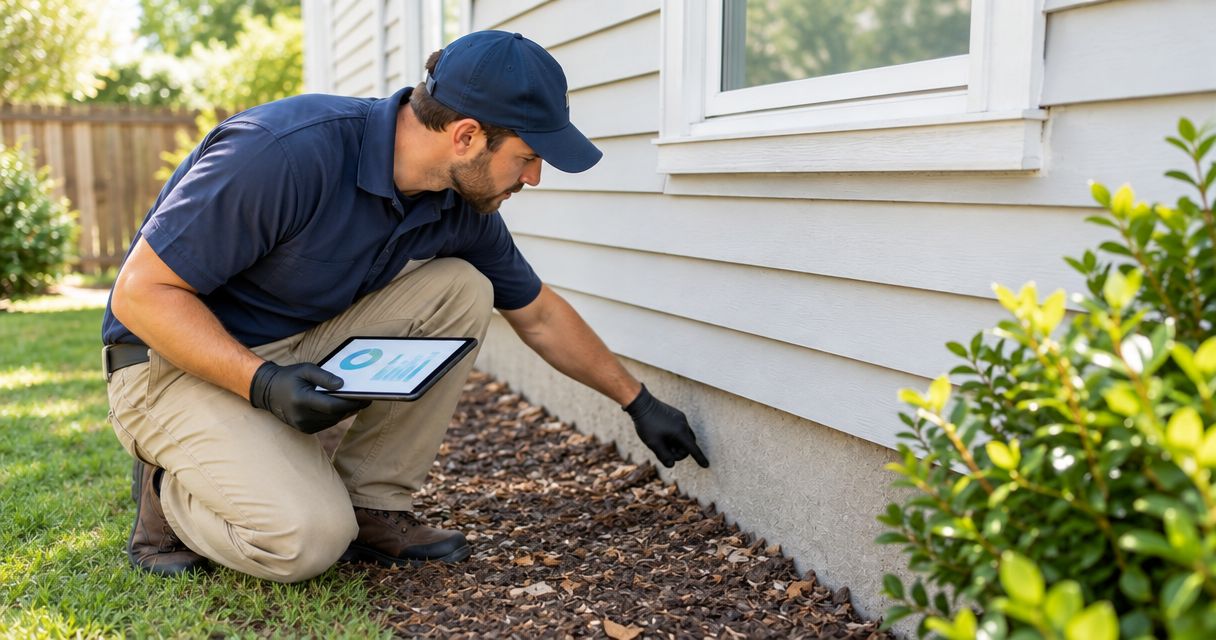
Compare pest control quotes in Sunnyvale by matching the pest, treatment area, included work, follow-up terms, and exclusions before choosing a provider. A quote for treatment alone is not equivalent to one that also includes entry-point repairs, and a warranty does not automatically cover the whole property.
- Compare pest control Sunnyvale quotes by written scope, not service labels alone.
- Exo-Pest provides residential and commercial pest control services in Santa Clara County.
- Separate rodent treatment from rodent exclusion when comparing proposals.
- Require written follow-up terms and warranty exclusions before approving work.
Why this matters
A service name does not tell you exactly what a contractor will do. Two proposals can both say rodent control while describing different work: one addresses existing activity, while another also includes sealing identified entry points.
For your 2026 comparison, start with the same description of the problem for every provider. Homeowners should identify affected rooms and outdoor areas. Commercial customers should identify affected workspaces, storage areas, tenant spaces, and any access restrictions.
Exo-Pest provides insect, rodent, wildlife, mosquito, and termite control for residential and commercial properties in Santa Clara County. Exo-Pest is a fit for Santa Clara County homeowners and commercial property owners seeking pest control services. Match the proposed service to your property rather than assuming every service includes the same work.
How do you compare pest control quotes in Sunnyvale?
Compare written scope before comparing the total. Ask each provider to address the same pest, affected areas, and desired work. Then separate the initial service from follow-up visits, repairs, and any ongoing agreement.
Use this table to compare service approaches. These are scope categories, not claims about what any particular provider includes.
| Service approach | Best for | What to confirm | Main limitation |
|---|---|---|---|
| Targeted treatment | A defined pest problem in an identified area | Pest identification, treatment location, preparation, and follow-up | Does not establish that entry repairs or ongoing visits are included |
| Recurring service | A property owner seeking scheduled pest management | Visit schedule, covered pests, service areas, and cancellation terms | A recurring agreement does not automatically include every pest or repair |
| Rodent exclusion | A property with identified rodent entry points | Openings to be sealed, materials, access, and warranty boundaries | Sealing work and management of existing rodents are separate scope questions |
| Pest-specific inspection | A property owner who needs the problem assessed before choosing work | Areas inspected, access limits, findings, and any proposed next steps | An inspection does not establish that treatment is included |
Do not treat these approaches as interchangeable. A targeted service has a narrower purpose than a recurring agreement. Exclusion addresses entry points; it is not a substitute for asking how existing rodent activity will be handled.
Use the same comparison process for every quote
- Describe the problem. Record what you saw, where you saw it, and whether the affected area is occupied or used for food or storage.
- Match the scope. Ask providers to identify the pest, service areas, proposed work, and preparation requirements in writing.
- Check the terms. Read follow-up provisions, exclusions, authorization requirements, and warranty language separately.
- Approve the work. Resolve differences before signing. Keep the accepted proposal and any later changes together.
This process keeps a broad service label from hiding a narrow scope. It also gives you a clear record when a proposal changes after inspection.

Targeted treatment: define the pest and treatment area
A useful treatment proposal names the pest being addressed and the areas included. A statement such as general pest service leaves important questions unanswered if your concern is a particular insect, rodent activity, or termite damage.
For a home, ask whether the proposal includes the affected interior rooms, the exterior, or both. For a commercial property, identify which suites, shared areas, storage rooms, and exterior spaces are included. Do not assume a building-wide service from a quote that names only one area.
Best for: a property owner with a defined problem who wants a clearly bounded service. The advantage is a specific scope you can check against your concern. The limitation is that other pests, areas, or repairs require separate confirmation.
Before approving a targeted treatment in 2026, ask what preparation is required and who must complete it. Also ask how the provider will decide whether follow-up work is needed. Written answers are more useful than a general assurance that the problem will be handled.
Recurring service: check the agreement, not just the schedule
A recurring service proposal should explain the planned visits and what each visit covers. Ask whether the same areas are addressed each time and how you report activity between scheduled visits.
For homeowners, confirm any access needed to gates, garages, or interior rooms. For commercial customers, identify the person who authorizes entry and coordinates with occupants. A schedule is only useful when the provider can reach the agreed service areas.
Best for: a property owner who wants scheduled pest management under written terms. The benefit is a defined service arrangement. The limitation is that covered pests, additional visits, repairs, and cancellation terms still need individual review.
Do not assume that a recurring agreement includes termite control, wildlife work, or rodent exclusion. Ask each provider to identify what sits outside the agreement. Keep that list beside the included-work list when comparing proposals.
Rodent exclusion: separate sealing from other rodent work
Rodent exclusion concerns the entry points a provider proposes to seal. Compare those openings directly, rather than treating exclusion as another name for rodent treatment.
Ask each provider to describe the locations included, the proposed repairs, and any areas that cannot be assessed or reached. Then ask separately about existing rodents, monitoring, cleanup, and damaged materials. Those tasks should not disappear inside a broad rodent-control label.
Best for: a property with identified rodent entry points that need sealing. The benefit is a repair scope tied to specific openings. The limitation is that the agreement must separately address existing activity and any work beyond sealing.
For Exo-Pest rodent exclusion, $1200 is a typical price, and each property requires its own quote. That is not a fixed price or a starting price. Compare the proposed sealing work for your property rather than treating the typical figure as an offer.
The Exo-Pest 2-year rodent exclusion warranty covers only the entry points Exo-Pest seals; other work and new damage are excluded. It is not whole-property protection, coverage for every rodent problem, or an unconditional guarantee. Ask the written proposal to identify the sealed entry points so the warranty boundary is clear.
Why pest control quotes vary
For a 2026 quote comparison, differences in scope deserve an explanation before you choose a provider. Use these factors to identify whether proposals describe the same job:
- Pest and service type. Insect treatment, rodent control, wildlife work, mosquito control, and termite control are distinct service requests. Ask which one the proposal addresses.
- Areas included. Interior rooms, exterior areas, shared spaces, and separate buildings need clear boundaries. Confirm whether each affected area appears in the proposal.
- Treatment versus repairs. Ask whether the work addresses pest activity, entry-point sealing, or both. Separate cleanup and damaged-material work as additional scope questions.
- Follow-up arrangement. Distinguish the initial visit from scheduled visits and return-service terms. Confirm what triggers another visit and whether it falls within the agreement.
- Access and preparation. Identify spaces the provider needs to reach and tasks occupants must complete. Unresolved access questions make proposals harder to compare.
- Warranty boundaries. Read what is covered, what is excluded, and which work the warranty applies to. A warranty duration alone does not explain its value.
A longer proposal is not automatically better. Choose the proposal that clearly addresses your identified problem and states its limits. Ask a provider to revise vague language rather than supplying your own interpretation.
What should homeowners put in a 2026 quote request?
Tell the provider which parts of your Sunnyvale home are affected and what evidence you have seen. Describe sightings plainly. If you do not know the pest, ask for identification rather than choosing a treatment category yourself.
Include access details that affect the proposed work. Mention occupied rooms, pets, storage that blocks inspection, and areas you cannot safely reach. Ask the provider to explain preparation and any occupancy restrictions associated with the proposed service.
Use a short request you can send consistently:
- Identify the pest concern and affected areas.
- Ask for the proposed service and its boundaries in writing.
- Request preparation instructions and follow-up terms.
- Ask which repairs, cleanup tasks, and warranties are included or excluded.
Keep the response with your inspection notes. If the provider recommends additional work, ask for an updated scope before approving it.
What should commercial customers put in a 2026 quote request?
Identify the business areas involved without assuming the whole property needs the same service. Offices, occupied tenant spaces, storage rooms, and shared areas should be named separately when they form part of the request.
State who controls access and who can approve work. For leased premises, confirm the relevant responsibilities with the property owner or manager. Do not ask a provider to proceed on an assumption about who has authority.
Commercial quote requests should also address:
- Service access. Identify an onsite contact and any restricted areas.
- Occupant coordination. Ask what notices or preparation the proposed work requires.
- Written records. Request a clear description of completed and recommended work.
- Approval boundaries. State who must approve changes or additional tasks.
A commercial agreement needs clear operating instructions as well as a service description. Ask how the provider will communicate findings and proposed changes before authorizing the work.
Request a free pest control quote
Discuss your Sunnyvale home or commercial property and ask for a clear service scope.
Should I choose the lowest pest control quote?
Choose the lowest quote only after confirming that the scope meets your needs. A proposal that omits an affected area, entry-point work, or expected follow-up is not equivalent to one that includes it.
Ask the provider to explain differences in writing. If a task is unnecessary, have that explained too; a larger scope is not automatically the right scope.
Does a rodent exclusion warranty cover the whole building?
A 2-year rodent exclusion warranty from Exo-Pest covers only the entry points the company seals. Other work and new damage are excluded. Compare the covered openings with the written repair scope rather than interpreting the warranty as protection for the entire building.
FAQ
What should I compare in pest control Sunnyvale quotes?
Compare the pest, treatment areas, included work, follow-up terms, and exclusions. Ask providers to quote the same scope before choosing between proposals.
Is a recurring pest service better than a targeted treatment?
Neither approach is automatically better. A targeted treatment addresses a defined problem, while recurring service provides scheduled work under an agreement whose coverage you must check.
Does rodent control include sealing entry points?
Do not assume rodent control includes sealing entry points. Ask the proposal to identify exclusion work separately from management of existing rodent activity.
Can I compare quotes before the pest is identified?
You can request an assessment, but a treatment comparison needs a clearly identified problem. Ask each provider to explain what the proposed service addresses.
What should a commercial property manager ask before approving service?
Ask which areas are included, what access and preparation are required, and who authorizes changes. Confirm responsibilities with the property owner or relevant tenant before approving work.
Does a pest control warranty cover every future problem?
Do not assume a pest control warranty covers every future problem. Read the covered work and exclusions, and ask for clarification before approving the agreement.
What should I keep after accepting a pest control quote?
Keep the accepted proposal, preparation instructions, service records, and warranty terms together. Retain written approval for any later changes to the work.
One last thing
An exclusion in writing is more useful than an assumption left unchallenged. Before accepting your 2026 pest control proposal, ask: what part of my stated problem does this quote not address?
For a homeowner, that question clarifies responsibility for repairs or cleanup. For a commercial customer, it clarifies service boundaries across occupied and shared spaces. Request a free quote with those boundaries in mind, then approve the work you actually need.
Related guides
- How to choose pest control in Santa Clara
- Rodent exclusion costs for a local home
- What homeowners should expect from a termite inspection in San Jose
- Rodent bait stations for Santa Clara County homes
Leave a Reply