
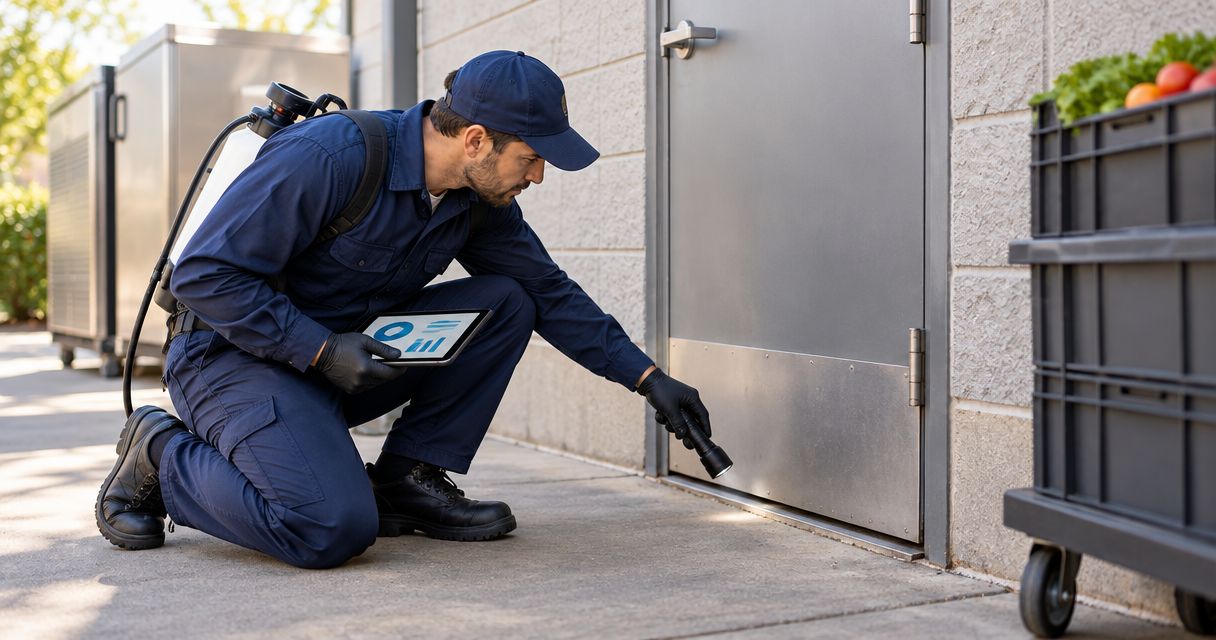
Restaurant rodent exclusion is the practice of closing rodent entry points with the aim of protecting food, storage areas, and daily service. This 2026 guide covers the restaurant-specific challenge: keeping doors, deliveries, and repairs from reopening routes into an otherwise well-maintained building.
- Rodent exclusion for restaurants combines entry-point sealing, delivery checks, food storage, and follow-up inspections.
- Exo-Pest is best for Santa Clara County restaurants seeking local rodent control and entry-point sealing.
- Door repairs prevent access; traps address activity. Restaurants need to distinguish those jobs.
- Assign responsibility for receiving doors, storage checks, and repair records before the next delivery.
Start with a building walkthrough and a written repair list. If you need professional help, Exo-Pest provides residential and commercial pest control in Santa Clara County. Ask for a free quote that identifies the work your restaurant needs, rather than assuming a general pest service includes exclusion.
Why rodent exclusion matters for restaurants
A restaurant can clean thoroughly and still leave rodents an open entrance. Receiving doors, utility penetrations, damaged thresholds, and shared service corridors require attention alongside food handling. Cleaning removes attractants; it does not repair a gap beneath a door.
Restaurants also have competing operational needs. Deliveries need access, kitchen staff need ventilation, and maintenance crews need to reach equipment. Your exclusion plan must work during service, not just when the building is empty.
For your 2026 operating plan, separate three responsibilities: preventing access, managing rodent activity, and protecting food. Assign an owner to each. If you lease the premises, establish which repairs belong to your business and which require the landlord's approval.
In mixed-use buildings, coordinate with neighboring businesses and residential property managers. Your restaurant controls its own doors and storage practices, but shared walls, utility spaces, and waste areas require a shared repair plan.
How to build a restaurant rodent exclusion plan
1. Map entry points before choosing a treatment
Walk the outside perimeter and the corresponding interior spaces. Start at the receiving entrance, then inspect customer doors, utility openings, storage rooms, and waste areas. Photograph suspected access points so a contractor can distinguish building repairs from routine pest-control work.
Create a simple marked-up floor plan on paper. Record the location, visible condition, responsible person, and next action for each issue. A photo of a gap documents a repair need; it does not prove that a particular rodent used it.
Keep staff out of unsafe roof spaces, electrical equipment, and inaccessible cavities. Those areas belong in the professional inspection scope, not on a closing employee's checklist.
- Mark each exterior door and utility penetration on the floor plan.
- Photograph damaged thresholds, screens, vents, and wall openings.
- Record sightings separately from suspected entry points.
- Identify shared spaces that require landlord access.
- Assign 1 shift lead to maintain the issue log.
2. Make doors close correctly during service
Inspect the entire door assembly, not just the bottom edge. A sweep cannot compensate for a door that hangs crooked, a damaged frame, or a closer that fails to latch. Check receiving doors from both sides while they are fully closed.
Have staff record when a door must remain open for a delivery. The objective is to shorten unattended openings without obstructing receiving work or emergency exits. Never add hardware that compromises required exit operation.
Build a 10-minute door check into your opening routine. Treat that as an assigned operating task, not a claim that every restaurant needs the same inspection time.
- Check that exterior doors close and latch without assistance.
- Look for visible gaps around thresholds, frames, and corners.
- Ask a qualified contractor to repair alignment and damaged hardware.
- Keep carts and waste bins from holding doors open.
- Escalate recurring door failures instead of repeatedly adjusting a sweep.
3. Separate entry-point sealing from rodent removal
An entry-point repair and an active infestation need different decisions. Sealing prevents access through the repaired opening; it does not establish that every rodent is outside. Ask how inspection, control, sealing, and follow-up will be coordinated before work begins.
You can document accessible gaps yourself. For concealed routes, active rodent signs, or repairs around building systems, request a professional assessment. Exo-Pest rodent exclusion is an option for Santa Clara County restaurant operators who need entry-point sealing assessed alongside rodent control.
The explanation of what entry-point sealing involves provides background on the physical work. A restaurant still needs its own scope because receiving operations, food areas, and shared commercial spaces change the job.
- Ask which openings the proposed work will seal.
- Ask how existing rodent activity will be addressed.
- Specify repair materials appropriate to the opening and surrounding surface.
- Keep required ventilation, drainage, and equipment access functional.
- Request photographs and a location list for completed repairs.
4. Control the receiving process
A closed building still needs deliveries. Give receiving staff a repeatable sequence so incoming goods do not bypass inspection or leave the service entrance unattended. Check accessible packaging surfaces for damage or signs of contamination before moving goods into storage.
Set aside questionable items away from food preparation and follow your food-safety procedures. Do not brush off rodent evidence and place the package on a storage shelf. Record the delivery and notify the person authorized to reject or handle affected goods.
Use this receiving sequence in your 2026 staff training. It connects door control to food protection rather than treating them as unrelated duties.
- Prepare space inside before opening the receiving door.
- Inspect packaging before moving goods into storage.
- Separate questionable goods from accepted deliveries.
- Close the door as soon as unloading permits.
- Record damage or rodent evidence and notify the manager.

5. Make storage easy to inspect and clean
Arrange storage so staff can see spills, packaging damage, and evidence along accessible edges. A crowded room turns inspection into a moving project, which makes it easier for defects to remain unnoticed. Keep the floor and the route to each storage area accessible.
Use suitable food-storage containers and keep lids closed. Rotate stock so older goods do not remain undisturbed behind newer deliveries. Cleaning should include the areas beneath and behind movable storage equipment when staff can reach them safely.
Do not dry-sweep or vacuum rodent droppings. Follow public-health cleanup guidance and your food-safety procedures, and keep affected food out of service pending the appropriate handling decision.
- Remove unnecessary cardboard and unused supplies from storage.
- Keep food in suitable containers with secure lids.
- Leave access for inspection and cleaning around shelving.
- Clean spills promptly, including beneath movable equipment.
- Report damaged packaging and rodent evidence immediately.
6. Coordinate waste handling and building repairs
Waste areas need the same attention as the receiving entrance. Keep containers closed, address spilled food, and report damaged lids or surrounding structural gaps. A tidy kitchen does not cancel an unattended waste problem outside the service door.
Give maintenance contractors clear instructions about exclusion repairs. Plumbing, electrical, and equipment work can disturb sealed openings or create new penetrations. Require a completion check before a repair disappears behind equipment or stored supplies.
Your 2026 maintenance log should connect each new opening to a named person responsible for closing it appropriately. In leased or shared buildings, get the landlord's responsibilities in writing rather than relying on a verbal handoff.
- Check waste-container lids and surrounding spill areas.
- Keep waste from obstructing exterior door closure.
- Tell contractors which existing seals must remain intact.
- Inspect accessible penetrations after equipment or utility work.
- Record landlord requests and unresolved shared-area repairs.
7. Verify repairs and define follow-up responsibilities
Review the repair list with the person completing the work. Match finished repairs to the original photographs and locations. Then check the operating conditions that affect them: doors closing, deliveries arriving, and staff moving supplies through storage.
Review your issue log every 7 days as a management routine, and act immediately on new rodent evidence. That review interval is a suggested administrative schedule, not a reason to delay a food-safety response.
Exo-Pest's 2-year rodent exclusion warranty covers only the entry points Exo-Pest seals. Other work and new damage are excluded. It is not whole-property protection or coverage for every rodent problem, so ask the quote to identify the covered entry points clearly.
- Match each completed repair to a documented location.
- Confirm who handles activity reports after sealing.
- Keep warranty coverage separate from other service commitments.
- Recheck affected areas after construction or equipment changes.
- Update the plan when door use or delivery routines change.
Compare restaurant rodent-control options
Choose an option by the problem it solves. Staff checks support exclusion, but they do not replace structural repairs or management of active rodents. Likewise, a trapping program does not close an entrance beneath a damaged receiving door.
Use this comparison when assigning work or reviewing a proposal. Ask each provider to state the scope rather than assuming every pest-control visit includes the same tasks.
| Option | Best for | Main benefit | Key limitation |
|---|---|---|---|
| Staff inspection and sanitation | Daily door, delivery, and storage checks | Makes operating responsibilities visible | Does not repair concealed routes or resolve an infestation alone |
| Facilities-led repairs | Defined door, frame, and building defects | Addresses the physical condition causing a gap | Requires coordination with rodent inspection and control |
| Professional rodent control | Assessing and managing active rodent problems | Adds pest-specific inspection and control planning | Does not mean entry-point sealing is included |
| Coordinated rodent exclusion | Combining inspection, sealing, operating changes, and follow-up | Connects building work with restaurant routines | Requires clear responsibilities and checks after new damage or alterations |
For restaurant rodent exclusion in 2026, request a written explanation of what is included, what is excluded, and what your team must maintain. A useful proposal distinguishes building repairs, rodent control, cleanup responsibilities, and follow-up rather than grouping them under one vague service description.
Request a restaurant rodent exclusion quote
Ask for a free quote covering your restaurant’s entry points, rodent concerns, and repair scope.
Common mistakes restaurant operators make
Treating a door sweep as a complete repair
A new sweep addresses only part of the door assembly. Check the frame, threshold, alignment, and closing action before approving the repair. Ask staff to demonstrate how the door works during an actual receiving task.
Treating traps as proof the building is sealed
Traps and exclusion serve different purposes. Require a separate record of sealed openings, and keep investigating new activity rather than assuming the trap location identifies the entrance.
Letting deliveries override the door policy
A written rule fails when the receiving area has nowhere to put incoming goods. Prepare space, assign a receiver, and decide who closes the door. Make the routine practical enough to follow during a busy shift.
Leaving shared spaces outside the plan
Restaurants in shared buildings cannot manage every service corridor or utility area alone. Record the boundary of your responsibility and obtain a named landlord or property-management contact for unresolved repairs.
Reading a limited warranty as complete protection
Entry-point coverage is not a promise that no rodent can ever enter the property. Keep the covered repair list, report new damage, and clarify whether additional inspection or control work requires separate authorization.
FAQ
What is rodent exclusion for restaurants?
Rodent exclusion for restaurants is work that closes entry points and supports routines that keep those routes closed. It should be coordinated with rodent control when activity is present, plus delivery checks, food storage, and sanitation.
Is sealing gaps enough if rodents are already inside?
No. Sealing openings does not establish that rodents already inside have been removed. Ask for a coordinated inspection, control, sealing, and follow-up plan.
What should restaurant staff check at receiving doors?
Check that receiving doors close and latch, and inspect the threshold, frame, and edges for gaps or damage. Keep deliveries from leaving the entrance unattended and report repeated closing failures.
Should a restaurant use traps instead of exclusion?
Traps are not a substitute for repairing rodent entry points. Rodent control addresses activity, while exclusion addresses access; ask which tasks your proposed service includes.
Who handles rodent exclusion in a leased restaurant?
Responsibility depends on the lease and the agreed repair scope. Document which tasks belong to restaurant management, the landlord, maintenance contractors, and the pest-control provider before work begins.
What does Exo-Pest’s rodent exclusion warranty cover?
Exo-Pest’s 2-year rodent exclusion warranty covers only the entry points Exo-Pest seals. Other work and new damage are excluded; it does not provide whole-property protection or cover all rodent problems.
Can I request a free restaurant rodent exclusion quote?
Yes. Request a free quote from Exo-Pest for your Santa Clara County restaurant. Describe the activity, affected rooms, receiving-door concerns, and any shared-building access issues so the requested scope is clear.
One last thing
Check exclusion repairs after unrelated maintenance, not just after rodent sightings. A utility installation or door adjustment can change a previously repaired area. Add an exclusion check to your contractor closeout process so reopening the building does not also reopen an entry point.
Related guides
Leave a Reply