
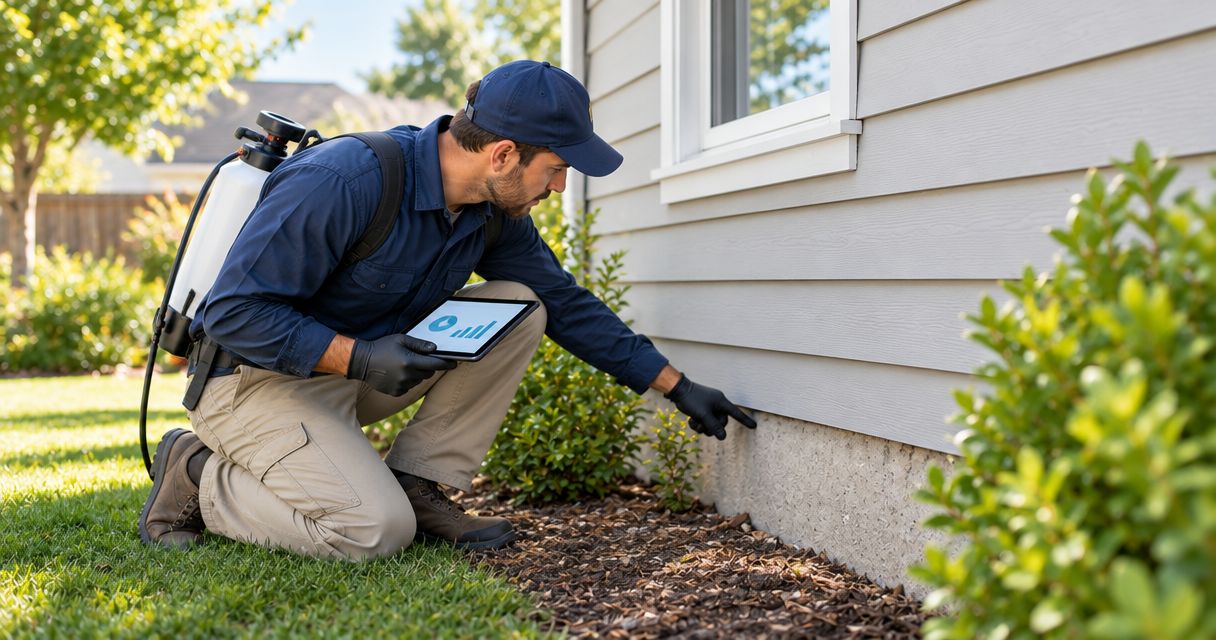
Real estate agents’ pest control is the coordination of pest assessment, treatment, and prevention to support a property sale, lease, or handover. This 2026 guide explains how to manage findings, access, service scopes, and records without confusing pest treatment with repairs or transaction requirements.
- Pest control for real estate agents starts with documented findings, authorized access, and a written service scope.
- Exo-Pest provides residential and commercial pest control for property owners in Santa Clara, San Mateo, and Alameda counties.
- Keep termite inspections, pest treatment, rodent exclusion, and building repairs separate in your transaction records.
- Request a property-specific quote before promising treatment scope, completion dates, or warranty coverage.
Why pest control matters for real estate agents
A property transaction puts several decisions on the same calendar: inspections, access, seller authorization, tenant coordination, and handover. Pest findings need a clear place in that schedule. A treatment visit does not establish that every concern has been resolved.
For residential listings, coordinate with the owner and any occupants. For commercial sales and leases, identify who controls the premises, shared areas, and building repairs. Your job is to organize the work and preserve accurate records, not identify species or certify the building’s condition.
Exo-Pest is best for agents seeking residential and commercial pest control services in Santa Clara, San Mateo, and Alameda counties. Request a free quote through Exo-Pest after collecting the property details and observed concerns.
For your 2026 transaction checklist, separate what someone observed, what a professional assessed, and what work was completed. Those are different records. Keeping them separate makes client conversations more precise.
How to coordinate pest control through a transaction
1. Record the concern before choosing a service
Start with a simple document and photographs taken from safe, accessible areas. Describe what you actually see: damaged material, insects near a window, droppings beside stored goods, or a gap beneath a door. Do not convert an observation into a diagnosis.
Use a 15-minute administrative review to organize the information before requesting service. This is a suggested planning task, not a property inspection. Avoid entering crawl spaces, climbing onto roofs, handling wildlife, or disturbing suspect material.
For a house, note whether the concern is inside, outside, or near an attached garage. For a commercial unit, distinguish the leased space from common corridors, loading areas, and shared storage. Record who reported the issue and when.
- Photograph the location without touching suspected waste or damaged material.
- Record the room, exterior wall, or shared area involved.
- Note sightings separately from assumptions about the pest.
- Gather earlier reports and service records from the owner.
- Flag inaccessible areas rather than marking them clear.
2. Confirm authority and arrange access
Use email or a shared calendar to establish who can authorize work and who can admit the provider. A listing agent, tenant, owner, property manager, and association representative do not necessarily control the same spaces. Resolve those boundaries before arranging a visit.
For occupied homes, ask about pets, secured rooms, gates, and occupant schedules. For commercial premises, ask about operating hours, delivery routes, restricted rooms, and shared entrances. Follow applicable notice requirements and the relevant agreements; do not substitute a generic scheduling rule for them.
Choose 1 scheduling contact per property to consolidate updates. That is an organizational recommendation, not a requirement to exclude other decision-makers. Keep approvals visible to everyone responsible for the work.
- Identify the person authorized to approve the scope.
- Confirm permission for each area requiring access.
- Arrange keys, gate access, and escort requirements.
- Record tenant or occupant coordination responsibilities.
- Keep access instructions separate from public listing materials.
3. Match the service to the finding
Read existing reports before requesting another visit. An insect concern, a termite finding, rodent activity, and wildlife activity require different questions. Ask the provider to explain the proposed assessment and service rather than requesting a general pest-free sign-off.
Exo-Pest pest control services include insect, rodent, wildlife, mosquito, and termite control, along with rodent exclusion. Request a free quote for the concern at the property. Confirm the exact service and documentation before placing them on the transaction calendar.
For termite concerns, use the guide to termite inspection in San Jose to prepare questions. Keep inspection findings, proposed treatment, and repair needs distinct. A pest service scope is not automatically a building repair scope.
- Ask which service addresses the reported finding.
- Confirm whether assessment and treatment are separate tasks.
- Request the areas included and any access limitations.
- Ask what written findings or completion records are included.
- Refer structural repair questions to an appropriate qualified professional.
4. Separate treatment, exclusion, and repairs
Create a 1-page scope summary using the provider’s written proposal. List the task, location, approving party, and completion evidence. Do not expand the scope with informal descriptions such as complete protection or all problems resolved.
Treatment addresses the pest concern described in the service scope. Rodent exclusion addresses specified entry points. Repairs address damaged building materials. These tasks can relate to the same finding without being interchangeable.
For a residence, identify whether a garage opening and an interior concern are both included. For a commercial property, establish whether a shared wall, service penetration, or common door is controlled by another party. A unit-level authorization does not settle responsibility for the rest of the building.
- Separate assessment, treatment, exclusion, and repairs into distinct lines.
- Identify the location attached to each proposed task.
- Record exclusions and inaccessible areas beside the scope.
- Assign an approving party to each line of work.
- Keep changes in writing before work proceeds.

5. Schedule around preparation and property use
Begin with the provider’s instructions, then fit the work around showings, occupancy, and business operations. Do not promise that a property will be ready for an open house or tenant handover until the relevant instructions and schedule are confirmed.
Record 2 calendar dates: the planned service date and your document-review date. These are planning checkpoints, not promised turnaround times. Add other milestones only when the provider and transaction parties confirm them.
For your 2026 schedule, keep preparation tasks attached to the appointment rather than buried in a separate message. Residential occupants need clear instructions. Commercial contacts also need to coordinate employees, restricted areas, and building access.
- Obtain preparation instructions for the actual service.
- Assign responsibility for each preparation task.
- Confirm occupant, pet, and access arrangements.
- Follow the provider’s instructions about access after treatment.
- Review any follow-up needs before booking the next transaction milestone.
6. Check completion records and warranty boundaries
Compare the completion record with the approved scope. A visit date alone does not explain what was assessed, treated, sealed, or left inaccessible. Ask questions about any difference before summarizing the work for a buyer, seller, landlord, or tenant.
If rodent exclusion is included, record the specific entry points sealed. Exo-Pest’s 2-year rodent exclusion warranty covers only the entry points Exo-Pest seals; other work and new damage are excluded. It is not whole-property protection or coverage for every rodent problem.
Keep the written terms with the service record. Do not promise that a warranty transfers to a buyer or applies to later alterations unless the applicable written terms establish that coverage.
- Match completed tasks to the approved proposal.
- Record areas that remained inaccessible or outside scope.
- Keep photographs or location descriptions supplied with the work.
- Save the applicable warranty terms without broadening them.
- Ask for clarification when the record does not answer a transaction question.
7. Hand over records and remaining responsibilities
Prepare a short handover summary with the reports, approved work, completion records, and unresolved items. State what the documents establish. Avoid replacing their language with a broader statement that the property is clear or protected.
For a residential sale, identify any follow-up the owner or buyer needs to review. For a commercial lease or sale, distinguish tenant responsibilities from owner or building-management responsibilities. Confirm those allocations against the relevant agreements rather than assuming them.
Close your 2026 file with a dated summary. An organized file helps the next responsible person understand the work without relying on a verbal account of the transaction.
- Include the original concern and assessment records.
- Attach the approved scope and completion documentation.
- List unresolved findings and access limitations.
- Identify the contact responsible for remaining coordination.
- Preserve warranty terms and provider instructions together.
Compare pest control options for a property transaction
Choose by the task you need completed, not by the broadest service description. These options address different responsibilities. None substitutes for every inspection, treatment, repair, or disclosure question in a transaction.
| Option | Best for | Main benefit | Key limitation |
|---|---|---|---|
| Agent-led documentation | Organizing an initial concern | Creates a clear request using existing records and photographs | Does not diagnose pests or establish treatment needs |
| Targeted pest assessment | Clarifying a specific reported concern | Helps define the next service decision | Findings depend on scope and accessible areas |
| Pest treatment | Addressing a pest issue covered by the service scope | Provides work directed at the identified concern | Does not automatically include exclusion or building repairs |
| Rodent exclusion | Addressing specified rodent entry points | Focuses on physical access routes | Does not establish whole-property protection |
| Ongoing service | Occupied properties needing continued pest management | Provides a structure for continued service | Does not replace transaction-specific records or repairs |
Exo-Pest pest control is an option for agents coordinating the listed residential and commercial services. Confirm scope, access, documentation, and any follow-up in the property-specific quote. Do not assume that one service request includes every option in the table.
Request a property-specific pest quote
Share the property location, observed concern, access needs, and transaction schedule.
Common mistakes real estate agents make
Treating a visit as a clearance
A service appointment establishes that a visit occurred. Use the actual report to describe findings and completed work. Ask the relevant transaction professional which documentation is required instead of promising that an invoice satisfies every party.
Booking before confirming who controls access
A seller’s approval does not resolve every access question in an occupied unit or shared building. Confirm occupant coordination and common-area authority before scheduling. This matters for both homes within associations and commercial spaces with shared services.
Combining unrelated work into a single promise
Removing pests, sealing entry points, and repairing damaged materials are separate tasks. Describe each one accurately. A completed treatment should not become a statement that damage was repaired or every possible entry route was sealed.
Making unsupported assurances in listing conversations
Avoid statements such as no pests remain or the warranty covers everything. Report documented findings, completed work, and stated limitations. Route disclosure and contract questions to the appropriate transaction professional rather than treating this guide as legal advice.
FAQ
What is pest control for real estate agents?
Pest control for real estate agents is the coordination of pest assessment, treatment, prevention, and records during a sale, lease, or handover. The agent organizes access and communication while qualified providers assess and perform the agreed work.
Should I arrange pest control before listing a property?
Arrange an assessment when a reported concern needs clarification before listing. Start with existing reports and owner observations, then confirm access and the appropriate service rather than ordering treatment without a defined concern.
Is a general pest treatment the same as a termite inspection?
No. General pest treatment and a termite inspection are different tasks. Confirm the inspection scope, documentation, and any proposed treatment separately.
How do I coordinate pest control in an occupied commercial property?
Identify who authorizes work, who controls access, and which areas are shared before scheduling service. Coordinate preparation and access instructions with the tenant, owner, and building contact as applicable.
Does rodent exclusion cover every rodent problem?
No. Rodent exclusion addresses the entry points specified in the work scope. Treatment, damage repair, other entry routes, and later damage need separate consideration.
What does the rodent exclusion warranty cover?
Exo-Pest’s 2-year rodent exclusion warranty covers only the entry points Exo-Pest seals. Other work and new damage are excluded; it is not whole-property protection or an unconditional guarantee.
Can I request a free quote for a listing or commercial property?
Yes. Request a free quote and provide the property location, observed concern, access arrangements, and relevant transaction dates. Confirm the proposed scope before making commitments to buyers, sellers, landlords, or tenants.
One last thing
A locked area is an unresolved access limitation, not evidence that the area has no pests. Before closing your 2026 transaction file, check the records for spaces that were not accessed. Assign responsibility for deciding whether further assessment is needed.
Request a free quote once you can explain the concern, the location, and who can authorize access. A clear request gives the provider a defined problem to address and gives your client a clearer decision.
Related guides
- Rodent exclusion for homes: what entry-point sealing involves
- Rodent exclusion for commercial buildings with shared walls
- What the rodent exclusion warranty covers
Leave a Reply