
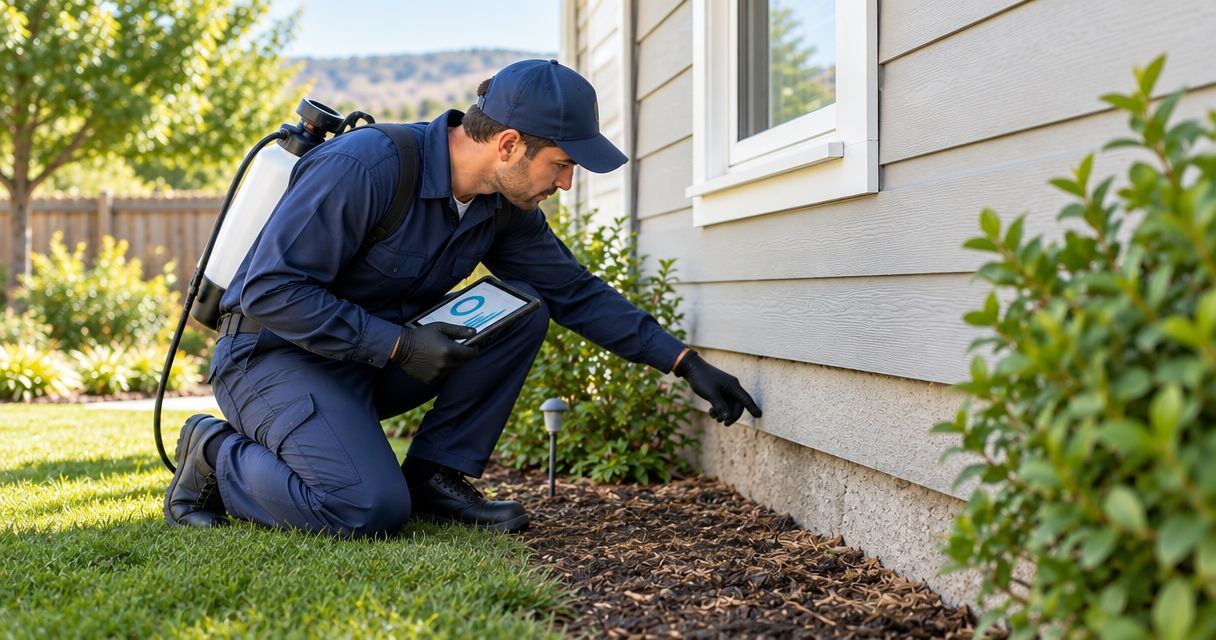
Prepare your Santa Clara home for pest control by confirming the planned service, protecting food and belongings, and clearing access only where your technician requests it. Follow the service-specific instructions for pets, leaving the property, returning, and cleaning; an inspection, an insect treatment, and rodent exclusion do not require identical preparation.
- Pest control Santa Clara preparation starts with service-specific instructions, not a whole-house clear-out.
- Exo-Pest provides residential and commercial pest control for Santa Clara County property owners.
- Protect food and pets, report recent pesticide use, and keep requested inspection areas accessible.
- Confirm return and cleaning instructions before treatment; do not assume a standard waiting period.
Why this matters
Prepare for the work being performed, not for every possible pest treatment. Emptying every cabinet or moving every piece of furniture without instructions creates unnecessary work. Leaving a needed access hatch blocked creates a different problem: the technician cannot inspect that area.
Exo-Pest provides pest control for homeowners and commercial property owners in Santa Clara County. For your 2026 appointment, request preparation instructions that identify the service, the areas involved, and any restrictions that apply to occupants.
How do you prepare your home for pest control in Santa Clara?
Use this sequence before your visit. The Santa Clara homeowner first-visit checklist also addresses appointment planning.
1. Confirm the service
Ask whether the appointment is an inspection, treatment, exclusion assessment, or scheduled follow-up. Then identify which rooms and exterior areas the technician needs to reach. Do not assume a pest sighting means every room needs treatment.
For a business, identify the affected work areas and name the person who can authorize access. Tell the technician about locked rooms, tenant-controlled spaces, and areas where customers or employees will be present.
2. Record what you have seen
Write down where you noticed pests, what you saw, and whether activity is recurring. Take photographs from a safe distance when possible. Show the technician the original locations rather than moving suspect items into another room.
Report recent sprays, baits, traps, and other pest-control products. Keep packaging or label information available so the technician can identify what was used. Avoid adding another product while waiting for service unless the technician specifically directs it.
3. Protect food and personal items
Store exposed food and follow instructions for dishes, utensils, pet bowls, and food-contact surfaces. Ask whether anything needs to leave a cabinet or counter. A general instruction to prepare the kitchen does not automatically mean emptying all storage.
Commercial customers should include break rooms, food storage, and preparation areas in this conversation. Designate a staff member to handle these tasks so food protection does not fall between shifts.
4. Clear the requested access
Move loose belongings away from the inspection route. Make requested doors, gates, utility areas, and access panels reachable without climbing over boxes. Ask before moving heavy appliances or furniture.
Keep exits clear throughout preparation. If an area is unsafe to enter, tell the technician rather than attempting to clear it yourself. Access planning does not require you to enter a crawl space or climb into an attic.
5. Plan for people and pets
Tell the technician about children, pets, aquariums, and anyone who needs an accessible route through the property. Ask which areas must remain unoccupied and how those restrictions will be communicated. Follow the treatment instructions rather than choosing a waiting period yourself.
At a workplace, tell the person responsible for staff scheduling. A closed door alone is not a complete access plan when employees, cleaners, or delivery workers can reopen it.
6. Confirm the handoff
Before work begins, confirm who will receive the service notes and explain them to everyone else. Ask what happens after the visit, including any cleaning restrictions and follow-up tasks. Keep those instructions with your 2026 appointment records.

Preparation differs by service
The best preparation depends on what the technician needs to inspect or treat. Use this comparison to frame your questions, not to replace the instructions for your property.
| Service | Best for | Preparation priority | Limitation to confirm |
|---|---|---|---|
| Insect control | Addressing identified insect activity | Report sightings and protect food near the work area | Cabinet emptying and cleaning instructions depend on the treatment |
| Rodent control | Addressing identified rodent activity | Report noises, sightings, and existing traps or bait | Rodent control does not automatically include entry-point sealing |
| Rodent exclusion | Addressing identified entry points | Provide access to suspected openings and building edges | Confirm exactly which openings the work includes |
| Termite inspection or control | Investigating termite concerns | Identify suspect areas and arrange requested access | An inspection is not the same as authorization for treatment |
| Mosquito control | Addressing mosquito concerns around the property | Identify outdoor activity areas and water-holding items | Confirm the treatment area and outdoor-use restrictions |
| Wildlife service | Addressing suspected wildlife activity | Describe the animal or signs without approaching it | Do not handle wildlife or block a suspected occupied opening yourself |
Match your preparation to the confirmed service. These services address different problems, and access alone does not establish what treatment is appropriate. Ask the technician to explain the proposed work before you authorize it.
Why preparation varies between properties
A copied checklist cannot resolve every access or safety question. These factors determine which instructions you need:
- Service type: Inspection, treatment, and entry-point sealing involve different tasks.
- Activity location: A kitchen concern requires different access from a garage, yard, or crawl-space concern.
- Occupancy: Children, pets, employees, and customers all need an appropriate access plan.
- Stored belongings: Boxes, shelving, and equipment can block areas the technician needs to inspect.
- Building access: Locked gates, shared rooms, and tenant-controlled areas require coordination.
- Previous products: The technician needs to know which pest-control products are already present.
For a 2026 service plan, put these details in the appointment notes. A homeowner can name an alternate contact; a business can assign an on-site manager. Either way, someone needs to answer access questions when the technician arrives.
How should you prepare a kitchen or break room?
Start by asking which surfaces and storage areas are involved. Store exposed food, contain food waste, and follow instructions for utensils and preparation equipment. Do not move items into another treatment area simply to clear the first one.
At home, include pet feeding areas in the discussion. At a business, include shared refrigerators, snack shelves, staff lockers containing food, and waste collection points. Tell the technician about areas that cannot be taken out of use without notice.
Cleaning before service and cleaning afterward are separate questions. Ask what should be cleaned before arrival and what must remain undisturbed after treatment. Do not wash, vacuum, or wipe a treated area until the service instructions permit it.
How much decluttering is necessary before treatment?
Clear the areas identified for inspection or work; do not assume you need to reorganize the entire property. Ask for specific locations, such as a cabinet, wall edge, storage corner, or access hatch. Keep the remaining belongings contained and out of the route.
If you need to declutter your home quickly, prioritize the technician’s access route rather than unrelated cupboards. Moving loose belongings into contained storage can make a room easier to inspect, but moving pest-affected items into another room can spread the problem.
For commercial premises, use the same approach with stock, deliveries, and maintenance equipment. Identify the inspection route before moving inventory. Do not stack cartons in front of exits, electrical equipment, or access panels while clearing another area.
Leave suspect nesting material, droppings, or heavily contaminated belongings alone until you receive cleanup instructions. Do not sweep or vacuum rodent droppings. Ask the service provider how to handle the affected area safely before disturbing it.
Prepare garages, yards, and shared access areas
Garages and exterior storage areas deserve attention when they are part of the planned visit. Identify door gaps, damaged screens, or locations where you have noticed activity without deciding yourself that each opening is a pest entry point. Let the inspection establish which features matter.
Move vehicles, bins, or stored items only as requested. Keep gates accessible and tell the technician about pets that use the yard. If the work involves shared boundaries or neighboring units, confirm which areas you are authorized to provide access to.
Businesses should coordinate deliveries and loading access before the appointment. A stockroom cleared in the morning can become inaccessible after a delivery. Give receiving staff the same preparation instructions as the person booking the work.
For your 2026 visit, leave a simple written note showing locked areas and the person holding each key. Do not assume the booking contact will be present when access is needed.
What should you do before rodent exclusion?
Before rodent exclusion, identify suspected activity areas and arrange access to the openings being assessed. Ask how existing rodent activity will be handled alongside sealing. Do not block a suspected occupied opening yourself.
Confirm the scope of sealing before approving the work. An exclusion quote should distinguish the identified entry points from unrelated repairs or future damage. Ask which preparation tasks belong to you and which tasks are included in the proposed service.
Exo-Pest’s 2-year rodent exclusion warranty covers only the entry points Exo-Pest seals; other work and new damage are excluded. It is not whole-property protection or coverage for every rodent problem. Keep the written scope so you can identify the covered entry points later.
Do you need to leave during pest control?
Whether you need to leave depends on the treatment and its instructions. Confirm the requirement before the visit, including whether it applies to the entire property or only specified areas. Do not borrow a return time from a previous appointment or another household.
Ask how you will know the area is ready to use again. Include pets, children, staff, and visitors in that question. For a commercial property, assign someone to communicate restrictions before employees begin their shifts.
What should you ask before the technician leaves?
Ask for clear answers about what was inspected, what work was completed, and what remains unresolved. Confirm which areas have restrictions and when cleaning or normal use can resume under the service instructions. Request written notes if several people manage the property.
Keep your questions focused:
- What should remain undisturbed?
- What cleaning is permitted, and where?
- What signs should you report after the visit?
- Who should receive follow-up photographs or updates?
- What access is needed for another appointment?
Exo-Pest pest control serves Santa Clara County homeowners and commercial property owners. Request a free quote and explain the pest concern, affected areas, and access limitations so the proposed service addresses your property.
Request a free pest control quote
Describe your pest concern, property type, and access needs before scheduling service.
FAQ
Do I need to empty every cupboard before pest control?
Empty cupboards only when your service instructions require it. Ask which cabinets are involved and where removed items should go.
Can my pets stay home during pest control?
Your pets’ access depends on the treatment instructions. Tell the technician about every pet, including aquariums, and confirm the required arrangements before service.
Should I spray for pests before the technician arrives?
Do not add another pest-control product unless the technician directs it. Report products already used and keep their label information available.
Can I clean immediately after pest control?
Clean treated areas only when the service instructions permit it. Ask separately about wiping surfaces, mopping, vacuuming, and handling food-contact areas.
How should a business prepare employees for pest control?
A business should assign a contact, communicate restricted areas, and coordinate access with staff, cleaners, and delivery workers. Include shared kitchens and storage areas in the preparation plan.
Should I seal a hole before a rodent inspection?
Ask for an assessment before sealing a suspected rodent opening. The inspection needs to consider existing activity and how entry-point work will be coordinated.
What should I have ready for a pest control appointment in 2026?
For a 2026 pest control appointment, have your service instructions, sighting notes, recent product information, and access arrangements ready. Confirm occupant restrictions and aftercare before work begins.
One last thing
Prepare the handoff as carefully as the rooms. A clear access route does not help if nobody can unlock the gate or explain where activity occurred. Choose one informed contact, share the instructions, and keep the service notes where the next person managing the property can find them.
Related guides
- Rodent exclusion for garages: doors, walls, and stored items
- Rodent exclusion for retail stores and stockrooms
- Pest control for offices: staff and access
Leave a Reply