
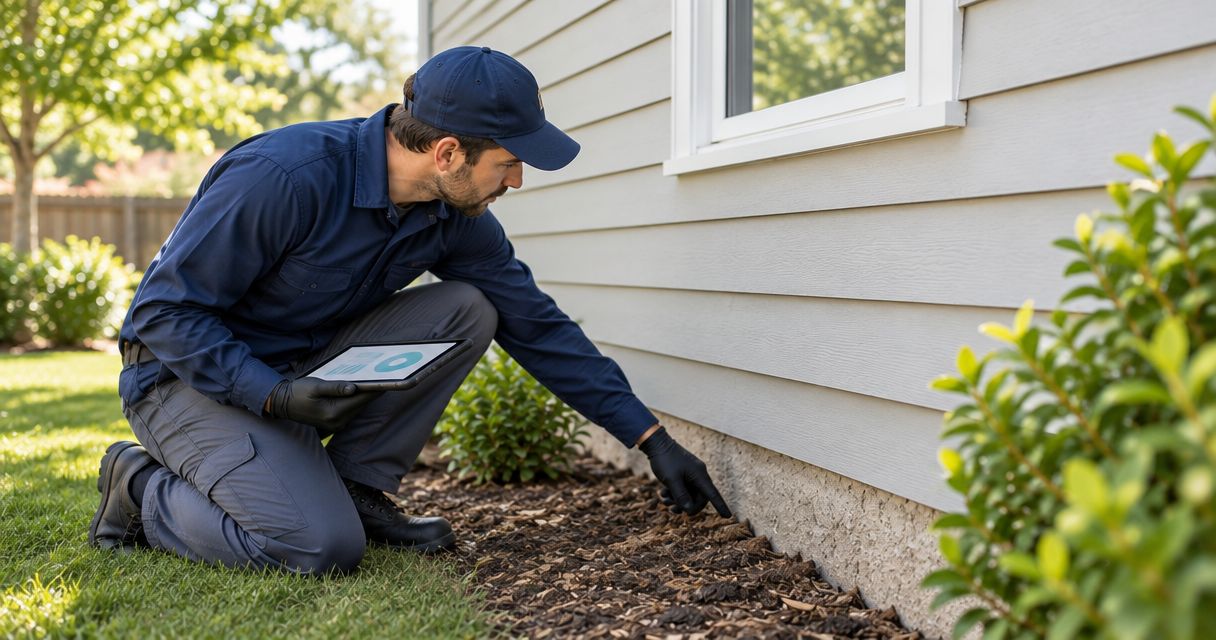
Termite treatment in San Jose requires a property-specific quote, not a single citywide price. For your 2026 budget, the inspection must establish the termite type, affected areas, and proposed treatment; ask separately whether the quote includes repairs, preparation, and follow-up.
- How much does termite treatment cost in San Jose? Get an inspection-based quote that defines treatment and exclusions.
- Compare termite treatment methods by the infestation they address, not by the total alone.
- Exo-pest provides termite control for residential and commercial property owners.
- Ask whether wood repairs, preparation, and follow-up appear in the written scope.
How much does termite treatment cost in San Jose in 2026?
Your termite treatment total depends on what the inspection finds and what the contractor proposes to treat. A useful quote identifies the problem, the treatment boundaries, and the work left out. A total without those details gives you little basis for comparison.
For a property-specific estimate, request a free quote. Describe whether the property is a home, rental, office, shop, or another commercial building, and explain where you noticed possible termite activity.
Use this breakdown when reviewing a 2026 proposal. These are scope questions, not a list of services automatically included in every contract.
| Quote component | What you need in writing | What not to assume |
|---|---|---|
| Inspection | Areas examined, findings, and access limitations | Every concealed space was inspected |
| Treatment | Method, target termite type, and treatment locations | Every method addresses every termite type |
| Preparation | Required tasks and who completes them | All preparation is included |
| Wood repairs | Whether damaged material needs separate evaluation or work | Killing termites restores damaged wood |
| Follow-up | Any scheduled checks and their scope | Every proposal includes continuing visits |
| Warranty | Written coverage, conditions, and exclusions, if offered | All future activity or damage is covered |
Why this matters
A termite quote is a plan for a specific infestation. Comparing totals without comparing that plan can lead you to choose less work without realizing it. Read the treatment description before deciding which proposal fits your property.
Homeowners need to understand access, household preparation, and any repair questions. Commercial customers also need to coordinate staff, tenants, inventory, and operating areas. The treatment decision should address the building's findings; the work plan should address how people use it.
The same approach applies when you compare proposals in Santa Clara, San Mateo, or Alameda counties. County names alone do not establish the treatment scope. Ask each provider to explain the findings at your address.
Why termite treatment quotes vary
The most useful question is not simply whether a proposal is high or low. Ask what work accounts for the difference. These factors help you compare proposals without treating unlike services as interchangeable:
- Termite type. Drywood termites and subterranean termites have different habits. The treatment recommendation needs to match the identified termite.
- Treatment boundaries. Work directed at a defined location differs from a proposal addressing a broader area or the whole structure.
- Access. Crawl spaces, attics, wall coverings, stored belongings, and occupied rooms affect what can be inspected and reached.
- Building layout. Shared walls, separate units, additions, and connected spaces require a clear description of the treatment boundaries.
- Preparation and coordination. Household arrangements and commercial access requirements need to be assigned before work begins.
- Separate repair needs. Termite treatment addresses the pest problem. Repairing damaged building materials is a separate scope unless the proposal expressly includes it.
Ask the contractor to connect each proposed task to an inspection finding. That explanation makes a quote easier to evaluate than a broad promise to handle termites.
Localized treatment: compare the treatment boundaries
Localized treatment addresses identified areas rather than automatically treating an entire building. It is a treatment category to discuss after an inspection, not a shortcut to select before the infestation is assessed.
Its practical advantage is a defined work area. Its limitation is equally important: treatment at a named location does not establish that untreated or concealed areas are termite-free. Ask how the inspector determined the recommended boundaries and what remains inaccessible.
For a home, request a clear description of the affected room, wood member, or accessible area. For a business, ask whether the proposal addresses only the occupied unit or also considers connected spaces relevant to the findings.
Best for comparison: localized-treatment proposals that identify the same affected areas. Do not compare a narrowly defined spot treatment with whole-structure work as though the scope were identical.
Fumigation: understand what whole-structure treatment involves
Structural fumigation is a whole-structure treatment used for drywood termite infestations. It requires occupants to leave and the property to be prepared according to the fumigator's instructions. It does not repair wood damage or create permanent protection against future infestations.
The advantage is treatment beyond only the exposed locations selected for spot work. The limitation is the preparation and displacement involved. A recommendation needs to explain why whole-structure treatment fits the findings rather than merely presenting it as a larger package.
Homeowners should request written instructions covering people, pets, food, medicines, and access. Commercial customers should ask how the proposed work affects occupancy, inventory, adjoining spaces, and reopening arrangements. Follow the provider's specific instructions rather than a generic online checklist.
Subterranean termite treatment: check the proposed control method
Subterranean termite treatment addresses termites associated with soil and structural access routes. Treatment approaches include soil-applied termiticides and bait systems, depending on the property and the proposed control plan. Neither should be selected simply because it sounds less disruptive.
Ask where treatment or equipment would be placed, what access is required, and whether the proposal includes monitoring. A bait-system proposal and a soil-treatment proposal need separate explanations of their work and follow-up requirements.
The following comparison helps you ask useful questions. It does not establish which method your property needs or which methods a particular provider offers.
| Treatment approach | Best fit to discuss | Practical advantage | Limitation to clarify |
|---|---|---|---|
| Localized drywood treatment | Identified drywood activity within defined treatment areas | Focuses work on specified locations | Untreated concealed areas remain outside that scope |
| Structural fumigation | Drywood findings supporting whole-structure treatment | Addresses the structure beyond selected exposed spots | Requires preparation and vacancy; does not repair damage |
| Subterranean soil treatment | Subterranean activity suited to a soil-treatment plan | Targets soil-related termite access | Application boundaries and access need explanation |
| Subterranean bait system | Subterranean activity suited to a baiting plan | Provides a defined placement and monitoring approach | Servicing and monitoring obligations need explanation |
Choose the method supported by the inspection, then compare proposals for that method. Do not choose a treatment based only on the size of the quoted total.
How to get a useful termite treatment quote
For a 2026 termite treatment decision, organize the inspection and proposal review before committing to work. A short written record helps you keep the findings separate from the sales description.
- Record the signs. Photograph suspected termite evidence and note its location. Keep observations factual; a photograph alone does not establish the extent of an infestation.
- Arrange access. Identify locked rooms, crawl-space entrances, attic access, and stored items that block inspection. Commercial customers should name an authorized access contact.
- Review findings. Ask which termite type was identified, where evidence was found, and which areas could not be inspected.
- Compare scope. Request the treatment method, boundaries, preparation duties, exclusions, and follow-up terms in writing.
- Confirm responsibilities. Establish who handles access, preparation, repairs, and communication with occupants before scheduling treatment.

If you have noticed discarded wings or suspected swarmers, use the termite swarmers to inspection workflow to organize what you observed. Preserve the location details so the inspector knows where to look.
Exo-pest termite control is best for local homeowners and commercial property owners seeking a property-specific service quote. The company serves Santa Clara, San Mateo, and Alameda counties; confirm the proposed termite work and any exclusions in your written quote rather than assuming a particular treatment is included.
Request a termite control quote
Describe your property and suspected termite signs to request a free, property-specific quote.
What should homeowners check before approving treatment?
Homeowners should check treatment boundaries, preparation duties, and repair exclusions before approving termite work. Termite control and restoration of damaged wood are different jobs. If damage raises structural questions, ask who is qualified to evaluate it and whether that evaluation sits outside the treatment contract.
For your 2026 household plan, request written preparation instructions before making arrangements for pets, belongings, or time away. Do not assume every termite method requires the same preparation. The instructions should match the actual proposed treatment.
If a renovation is planned, tell the inspector which areas will be opened or altered. Coordinate the sequence with the relevant contractors instead of assuming pest treatment resolves construction questions.
What should commercial customers check before approving treatment?
Commercial customers should establish who controls access, who authorizes work, and which occupants need instructions. A proposal for a shop, office, warehouse, or managed building should identify the spaces covered. A unit address alone does not explain how shared areas are handled.
Keep operational requirements separate from treatment claims. Ask for the proposed access and occupancy instructions, then decide who will notify staff, tenants, or other building users. Do not infer a reopening schedule from a different property's experience.
Property managers in Santa Clara, San Mateo, and Alameda counties should also check responsibility under the applicable lease or management agreement. A contractor's treatment scope does not, by itself, resolve responsibility between owners and tenants. Get those responsibilities settled before authorizing work.
Does termite treatment include wood repairs?
Termite treatment does not automatically include wood repairs. The treatment proposal must expressly identify any repair work included; otherwise, ask for a separate assessment and written scope.
Keep the two decisions connected but distinct. You need to understand how the infestation will be treated and how damaged materials will be evaluated. Neither answer substitutes for the other.
Can you compare termite quotes without another inspection?
You can review existing proposals, but a contractor needs an adequate basis for recommending treatment. Share available reports and ask whether another inspection is necessary to establish the scope.
For a fair 2026 comparison, check that proposals address the same findings and identify any differences in access or treatment boundaries. A lower total is not evidence of better value when the proposed work differs.
FAQ
How much does termite treatment cost in San Jose in 2026?
Termite treatment in San Jose requires a property-specific quote based on inspection findings and the proposed method. Ask the provider to separate treatment, preparation, repairs, and follow-up so you can compare the actual scope.
Can I get a termite treatment quote for my business?
Commercial property owners can request a termite treatment quote. Identify the building use, occupied areas, access restrictions, and any shared spaces so the proposed scope addresses the property.
Is spot treatment better than fumigation?
Spot treatment is not automatically better than fumigation; the appropriate method depends on the termite findings and treatment boundaries. Localized work addresses specified areas, while structural fumigation treats the whole structure for drywood termites.
Will termite treatment fix damaged wood?
Termite treatment does not repair damaged wood. Ask whether repairs are expressly included or require a separate contractor and scope.
Does every termite treatment require me to leave?
Vacancy requirements depend on the treatment method and provider instructions. Structural fumigation requires occupants to leave; get the specific preparation and reentry instructions for the proposed work.
Does a termite warranty cover every future problem?
Do not assume a termite warranty covers every future problem. Read the written terms for covered work, conditions, exclusions, and any follow-up obligations before accepting the proposal.
Can I request a free termite control quote from Exo-pest?
You can request a free quote from Exo-pest for termite control. Describe your residential or commercial property, its location, and the signs you have noticed so the request addresses your situation.
One last thing
Ask what the quote leaves untreated. That question often tells you more about the proposal's boundaries than asking only what it includes. Request a clear explanation of inaccessible areas, excluded repairs, and responsibilities after treatment.
Keep the inspection findings, signed proposal, preparation instructions, and any warranty terms together. If questions arise later, those documents give you a specific scope to discuss rather than a remembered promise.
Related guides
- Termite inspection in San Jose: what homeowners should expect
- Termite report to close of escrow: complete workflow
- Termite inspection in San Jose before a home renovation
Leave a Reply