
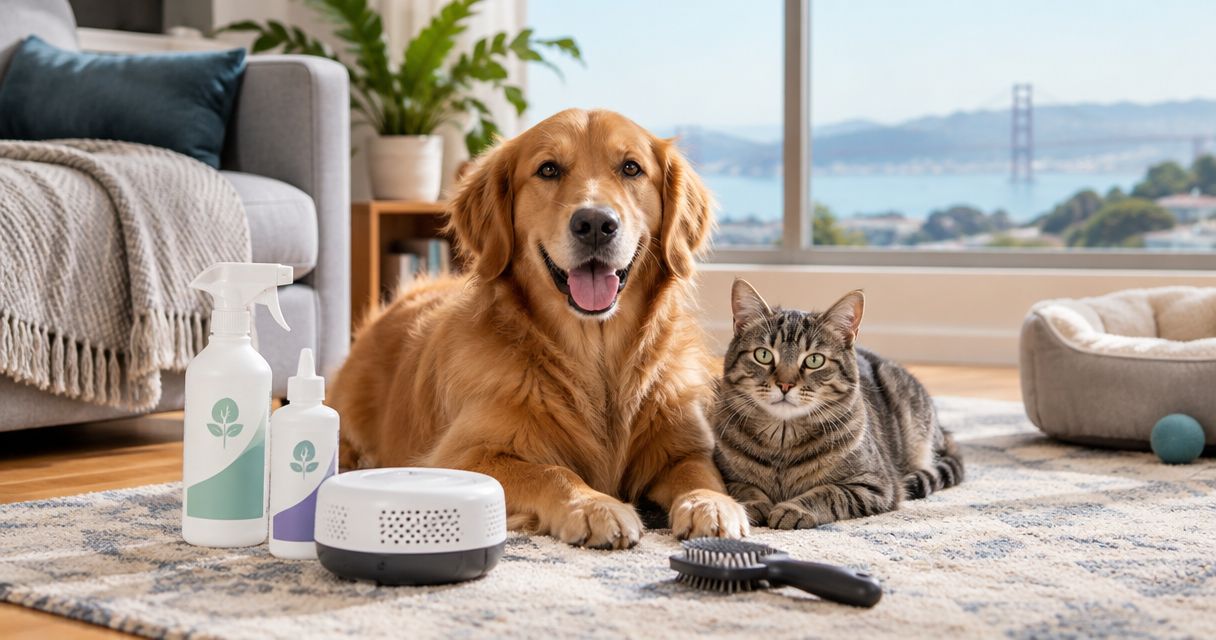
Best overall for homes with pets: veterinarian-selected flea medicine. Best for household cleanup: a vacuum. Best for washable pet bedding: laundry detergent used according to care instructions. This 2026 guide compares the best flea control products Bay Area households can consider and explains when to request property-specific pest control from Exo Pest.
- The best flea control products Bay Area homeowners choose must address pets and household flea activity separately.
- Veterinarian-selected flea medicine is the first choice for treating pets; household pesticides never replace pet medication.
- Vacuuming and laundering support flea control, while labeled growth regulators address immature stages.
- Exo Pest provides Bay Area pest-control services; request a property-specific quote for persistent household activity.
Why this matters
Flea control fails when the product addresses the wrong part of the problem. Treating a carpet does not replace appropriate treatment for a pet, and treating a pet does not remove flea stages already present around resting areas.
Start by separating what you have observed from what you suspect. Bites alone do not identify fleas; record jumping insects, flea comb findings, affected rooms, and where animals sleep before choosing a household pesticide.
For Bay Area homeowners and business property managers, the practical question is not which package looks strongest. It is which product fits the confirmed pest, the treatment surface, and the people or animals using that space.
What makes the best flea control products?
Use these criteria to choose flea-control products in 2026:
- Correct target: Pet medicines, household insecticides, and monitoring traps serve different purposes.
- Life-stage coverage: Adult flea control and prevention of immature flea development are separate functions.
- Species suitability: A product intended for dogs is not automatically suitable for cats.
- Site permission: The label must permit the exact indoor or outdoor application you intend.
- Practical instructions: Application, cleaning, retreatment, and reentry directions must fit your household.
- Clear limits: A useful product has a defined role; it does not promise to solve every source of flea activity.
Choose by label and purpose, not by the word strongest. Keep pet treatment decisions with your veterinarian and property-treatment decisions tied to the actual conditions at the building.
Flea control options at a glance
These rankings compare product categories, not individual formulations. The order reflects each category's role in a coordinated household plan, rather than a claim that every household needs every item.
| Rank and option | Best for | Standout function | Key limitation |
|---|---|---|---|
| 1. Veterinarian-selected flea medicine | Homes with pets | Treats fleas on the animal according to the selected medicine's directions | Does not replace household cleanup |
| 2. Vacuum | Carpets, upholstery, and accessible edges | Physically removes flea stages and debris | Does not reach every hidden location |
| 3. Laundry detergent | Washable bedding and fabrics | Supports removal through laundering | Unsuitable for nonwashable materials |
| 4. Labeled insect growth regulator | Immature flea development | Interferes with development of immature stages | Not a substitute for immediate adult control |
| 5. Labeled household flea insecticide | Confirmed activity on permitted surfaces | Targets fleas where the label allows treatment | Requires careful application and reentry compliance |
| 6. Light-based flea trap | Supplementary indoor monitoring | Captures some active adult fleas | Does not treat pets or eliminate immature stages |
1. Veterinarian-selected flea medicine: best for homes with pets
Flea medicine belongs at the center of the plan when a pet is carrying fleas. Your veterinarian can select an appropriate option using the animal's species, age, weight, health, and medication history.
Do not choose between oral and topical products using household pesticide advice. Those are veterinary decisions, and different medicines have different directions and precautions.
Veterinarian-selected flea medicine pros:
- Addresses the animal rather than only surrounding surfaces.
- Allows selection around the individual pet's needs.
- Comes with product-specific dosing and use directions.
Veterinarian-selected flea medicine cons:
- Does not remove flea stages from carpets or bedding.
- Requires correct species selection and dosing.
- Must fit the pet's health and other treatments.
Best for: Households with dogs, cats, or other pets needing veterinary flea assessment.
Verdict: Buy only after confirming the product is appropriate for your animal. Never apply a household flea spray to a pet.
2. Vacuum: best for carpets, upholstery, and accessible edges
A vacuum gives you a nonpesticide way to remove flea stages and debris from accessible household surfaces. Concentrate on pet resting areas, carpet edges, beneath accessible furniture, and upholstery that the manufacturer permits you to vacuum.
Use attachments that fit the surface. Contain and dispose of collected debris promptly, following the vacuum manufacturer's instructions rather than leaving it exposed indoors.
Vacuum pros:
- Supports physical removal without applying pesticide.
- Reaches several household surfaces with suitable attachments.
- Fits into a broader cleaning and treatment plan.
Vacuum cons:
- Does not treat fleas on pets.
- Cannot reach every crack, cavity, or inaccessible area.
- Requires repeated attention rather than a single pass.
Best for: Homes with carpets, upholstered furniture, and accessible pet resting areas.
Verdict: Buy if you lack a suitable vacuum; otherwise use the equipment you already have. A new appliance is not necessary just because you have found fleas.
3. Laundry detergent: best for washable pet bedding
Laundry detergent supports flea cleanup through washing permitted fabrics. Gather removable pet bedding, washable throws, and other affected textiles, then follow each item's care instructions for washing and drying.
The washing process matters more than a flea-themed product name. Do not add household insecticide to a washing machine or improvise chemical mixtures.
Laundry detergent pros:
- Works within an ordinary fabric-cleaning routine.
- Allows attention to removable resting-area materials.
- Avoids applying household pesticide directly to bedding during washing.
Laundry detergent cons:
- Does not treat carpets, fixed upholstery, or wall voids.
- Cannot be used on every fabric or filling.
- Does not replace treatment of an affected animal.
Best for: Washable bedding, covers, and fabrics associated with observed flea activity.
Verdict: Buy only if needed for laundering; skip specialty claims that do not change the fabric-care process. Keep clean materials separate from items awaiting washing.
4. Labeled insect growth regulator: best for immature flea development
An insect growth regulator, or IGR, interferes with development of immature insects. For household flea control, choose only a product specifically labeled for fleas and the intended treatment site.
An IGR is not interchangeable with a product intended to kill adult fleas. Read the active ingredients and directions because some household formulations combine different functions.
Insect growth regulator pros:
- Addresses development rather than adult fleas alone.
- Adds a distinct function to an appropriate household plan.
- Has label-defined sites and application instructions.
Insect growth regulator cons:
- Does not provide the same function as immediate adult control.
- Does not replace pet treatment or cleaning.
- Requires attention to surface restrictions and reentry directions.
Best for: Confirmed household flea activity where immature-stage control fits the assessment and label.
Verdict: Hold until you have confirmed the treatment site and the product's role. Do not add an IGR merely to increase the number of products in use.
5. Labeled household flea insecticide: best for permitted treatment sites
A household flea insecticide belongs only on surfaces and in locations permitted by its label. Check whether the directions cover the specific room, material, and application method before opening the container.
Remove people and animals as directed, and follow all drying, ventilation, and reentry instructions. More product does not mean better control.
Household flea insecticide pros:
- Provides a flea-specific treatment option for labeled sites.
- Defines application restrictions and precautions.
- Offers a separate role from cleaning and pet medicine.
Household flea insecticide cons:
- Incorrect application creates avoidable exposure risks.
- Surface permissions differ between formulations.
- Does not correct an untreated animal source by itself.
Best for: Confirmed household activity requiring treatment on a clearly permitted surface.
Verdict: Hold until identification, label review, and household precautions are complete. Request professional help when those decisions are unclear.
6. Light-based flea trap: best for supplementary monitoring
A light-based flea trap uses attraction and a capture surface to collect some active adult fleas. Its useful role is observation: documenting captures at a particular location while the wider control plan continues.
A quiet trap does not prove the property is flea-free. Placement affects what it captures, and immature stages are not represented by adult trap catches.
Light-based flea trap pros:
- Provides visible captures for review.
- Supports location-specific monitoring.
- Does not require spraying the monitored floor area.
Light-based flea trap cons:
- Does not treat animals.
- Does not eliminate eggs, larvae, or pupae.
- Cannot establish whole-property clearance.
Best for: Supplementary monitoring in suitable indoor locations.
Verdict: Buy only as a monitoring aid; skip it as your sole flea-control measure. Keep the device and capture surface away from children and animals as instructed.
How the options are ranked
This 2026 ranking prioritizes correct targeting, life-stage coverage, species suitability, site permissions, practical use, and clear limitations. It is not a laboratory test or a comparison of individual brands.
Pet medicine leads for homes with affected animals because household surface products do not replace veterinary treatment. Cleaning tools follow because they support physical removal; household pesticides require a more specific site-and-label decision. Traps finish last because monitoring is not treatment.
Coordinate pet care and property treatment
Fleas and ticks require separate product checks. Advice about tick prevention for dogs does not establish that the same medicine covers fleas, suits a cat, or is labeled for use in California; confirm the exact product with your veterinarian.
Tell the veterinarian about every animal in the household and any pest products already used. Give the property pest-control provider the same information, including where animals rest and which rooms have been treated.
For your 2026 household plan, use this sequence:
- Observe: Record actual insects, affected rooms, and pet resting locations.
- Confirm: Establish whether fleas explain the evidence before buying pesticides.
- Coordinate: Align veterinary advice with any proposed property treatment.
- Clean: Vacuum accessible areas and launder permitted fabrics.
- Review: Compare fresh observations with the agreed follow-up instructions.

This sequence keeps control and exclusion separate. Flea control addresses the infestation; exclusion addresses identified animal entry points when an assessment finds that building access is relevant. Sealing an opening alone does not treat flea stages already indoors.
Prepare a useful property-specific quote request
Exo Pest is best for Bay Area homeowners and business property decision-makers seeking property-specific pest-control service. Its services cover homes and businesses in Santa Clara, San Mateo, and Alameda counties, including the San Jose and Palo Alto areas.
Before requesting flea-control help in 2026, prepare a 7-day observation log if you can do so without delaying needed care. Record where activity occurs and what has already been applied; this is a communication aid, not a required waiting period.
A 5-minute review of accessible pet resting areas can help you describe the problem without disturbing hidden spaces. Use a 2-column record separating observations from actions: an insect seen near a sofa is an observation; vacuuming that sofa is an action.
Ask what identification, access, preparation, treatment, and follow-up the proposed scope includes. A free quote is not a promise of a free inspection, report, or treatment.
For apartments and commercial premises, identify who can authorize access and work. Tenants, managers, and owners need a shared plan rather than overlapping product applications.
Which flea control products should you choose?
For a home with affected pets, start with veterinarian-selected flea medicine plus vacuuming and laundering. Add household pesticide treatment only when the confirmed conditions and product label support it.
For a home without pets, start with identification rather than assuming a pet medicine or carpet spray is the answer. Persistent activity needs a property-specific assessment of where fleas are occurring and what is sustaining the problem.
The best 2026 choice is a coordinated plan, not a collection of unrelated products. Keep labels and treatment records together so each person involved knows what has happened.
FAQ
What’s the best flea control product for a Bay Area home with pets?
Veterinarian-selected flea medicine is the first choice for treating an affected pet. Combine appropriate animal care with vacuuming and laundering; household products do not replace pet treatment.
Can I use dog flea medicine on my cat?
Do not use dog flea medicine on a cat unless the product is specifically labeled for cats and your veterinarian confirms its use. Some dog flea products contain ingredients that are dangerous to cats.
Will vacuuming alone get rid of fleas?
Vacuuming alone is not a dependable complete flea-control plan. It supports physical removal from accessible surfaces but does not replace treatment of affected pets or address every hidden location.
Is an insect growth regulator better than a flea spray?
An insect growth regulator and an adult-killing flea spray serve different functions. Some formulations combine those functions, so read the active ingredients, treatment sites, and directions rather than choosing by package description.
Do flea traps prove my house is flea-free?
No, an empty flea trap does not prove a house is flea-free. Traps sample some active adults near their placement and do not measure every flea life stage throughout the property.
What should I do if I find fleas but don’t have pets?
Confirm the insect and record where activity occurs before applying household pesticides. A property-specific assessment can address the observed locations and possible animal access without assuming the cause.
How do I request flea-control help from Exo Pest?
Share your property location, observed activity, affected rooms, animals present, and products already used, then request a property-specific quote. Confirm what the scope includes; a free quote does not imply a free inspection, report, or treatment.
One last thing
An empty trap and a bite-free morning are observations, not proof of complete control. Review fresh evidence against the agreed plan instead of switching products after every change in activity.
Share what you are seeing through the contact page, describe previous treatments, and request a property-specific quote. Confirm the scope before authorizing work.
Leave a Reply