
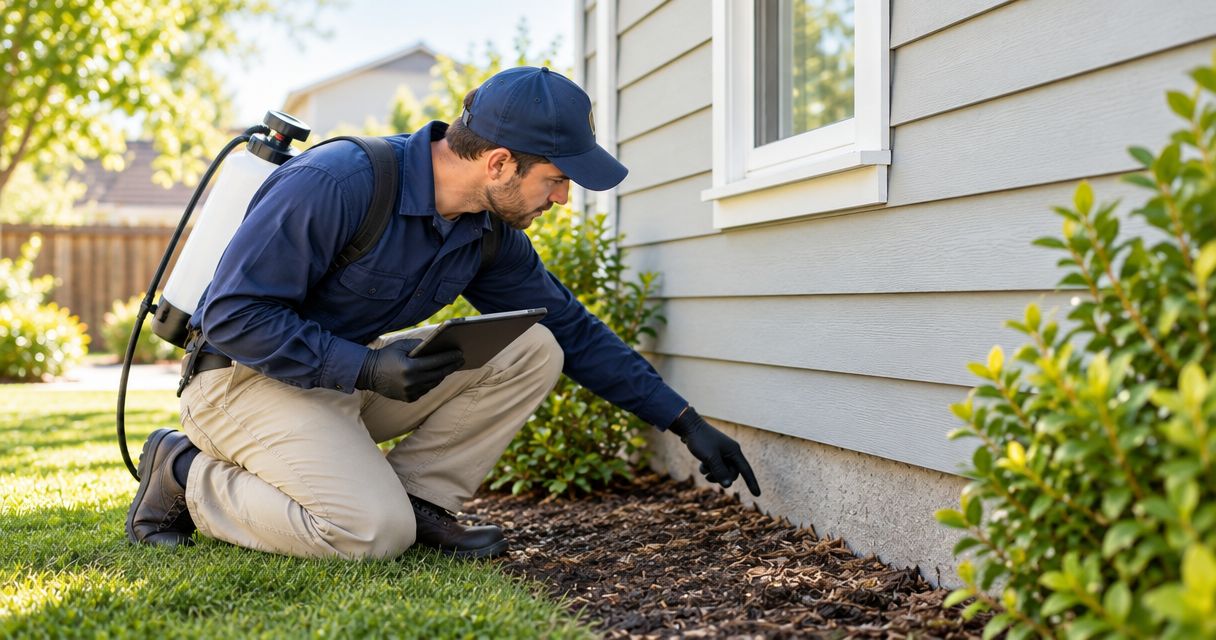
Santa Clara homeowners’ pest control is the process of identifying pests, treating active problems, and correcting conditions that let them return, with the aim of reducing repeat infestations. Recurring pests need more than another application: you need to distinguish ongoing activity from new entry and match the work to the pest.
- For pest control Santa Clara homeowners can act on, identify the pest before choosing treatment or rodent exclusion.
- Exo-Pest provides residential pest control; request a property-specific plan for recurring insect or rodent problems.
- Treatment addresses active pests; entry-point repairs address access. Neither replaces the other.
- Track sightings and completed work so follow-up decisions reflect evidence rather than a calendar alone.
Why pest control matters for Santa Clara homeowners
A recurring pest problem creates a different decision from an isolated sighting. You need to know whether the original problem remains, pests are entering again, or a different pest now needs attention. Repeating the same response without answering that question leaves the cause unresolved.
Exo-Pest pest control is best suited to Santa Clara homeowners seeking professional residential insect or rodent services. The company also serves commercial properties and property owners in San Mateo and Alameda counties; use the Exo-Pest service overview to identify the relevant service before requesting a free quote.
For your 2026 service plan, separate pest treatment from building repairs. A treatment proposal does not automatically include door repairs, moisture correction, or sealing every possible opening. Ask which tasks belong to the pest provider, homeowner, landlord, or building contractor.
Build a plan for recurring pests
Identify the pest before choosing a response
Start with observation, not a purchase. Photograph visible insects, note where activity occurs, and keep people and pets away from unfamiliar animals or contaminated areas. A description such as small bugs in the kitchen is less useful than a clear photograph and a location.
Different pests require different responses. Ant activity near food, suspected termite damage, and scratching above a ceiling should not all trigger the same treatment. When identification is uncertain, request professional identification before using a pesticide.
- Photograph visible pests without handling them.
- Record the room, surface, and time of each sighting.
- Note whether activity involves insects, rodents, or wildlife.
- Describe damage separately from live pest sightings.
- Avoid disturbing suspected nests or opening occupied cavities.
Map where the problem returns
Make a simple record before the next visit. For your 2026 pest log, use a suggested observation window of 7 days if there is no immediate health or safety concern; do not delay help for an urgent problem just to complete the record.
Divide the property into 3 observation zones: indoors, the building exterior, and outdoor storage or landscaping. The point is to identify repeat locations, not to inspect unsafe spaces yourself. A homeowner can mark kitchen sightings while a commercial manager can mark a break room, receiving area, or shared utility wall.
- Mark sightings on a basic floor plan.
- Record whether activity occurs near food or water.
- Note recent leaks, deliveries, repairs, or remodeling.
- List previous treatments and the products used, if known.
- Photograph accessible gaps from a safe position.
Separate active control from entry-point repairs
Begin with an accessible visual check around doors, utility openings, and storage areas. Do not climb onto a roof or enter a cramped crawl space to complete a checklist. Exo-Pest offers rodent exclusion alongside rodent control; request an assessment when recurring rodent activity suggests an access problem.
Removing rodents and sealing entry points are different tasks. The work needs a sequence that accounts for animals already inside. Review what rodent exclusion for homes involves, then ask which openings the proposed work addresses and how active rodents will be handled.
- Identify suspected openings without sealing occupied routes blindly.
- Ask how active rodents will be addressed before sealing.
- Request a written list of entry points included in the work.
- Separate pest work from unrelated construction repairs.
- Ask who checks the completed seals and remaining activity.
Remove accessible food, water, and shelter
Start with changes you can make safely. Store food in closed containers, clean spills, repair accessible leaks through the appropriate trade, and reduce clutter where inspection is needed. These steps support treatment; they do not prove that an infestation has ended.
For a home, include pet food, garage storage, and under-sink moisture. For a commercial property, include staff food, waste handling, and delivery storage. In either setting, assign responsibility rather than assuming someone else has corrected the condition.
- Clean crumbs and spills where activity has been recorded.
- Store household food and pet food in closed containers.
- Check accessible plumbing for visible leaks.
- Keep waste containers closed and surrounding areas clean.
- Move stored items enough to allow safe inspection.
Match the service to the evidence
Review your notes before requesting treatment. Ask what pest has been identified, where the evidence is, and why the proposed method fits that evidence. Professional insect, rodent, mosquito, termite, and wildlife services address different problems; a general service description is not a substitute for a defined scope.
For a 2026 proposal, ask whether the plan includes interior work, exterior work, monitoring, exclusion, or follow-up inspection. You do not need every service on the list. You need the services tied to the actual problem and a clear explanation of what remains outside the agreement.
- Name the pest and affected areas in the service request.
- Ask what the proposed treatment is intended to accomplish.
- Confirm preparation and access instructions before the visit.
- Explain where children, pets, or sensitive occupants spend time.
- Request written limits and follow-up terms.
Coordinate access and shared responsibilities
Prepare the property using the provider’s instructions, not a generic rule about moving everything or leaving the building. Treatment-specific directions determine access, preparation, and reentry. Tell the provider about locked gates, inaccessible rooms, and areas you cannot clear safely.
Shared buildings need another layer of coordination. A condo owner may not control a shared wall or roof opening, while a business tenant may not control an exterior door repair. Identify who can authorize that work before treating the unit as a separate building.
- Confirm which rooms and exterior areas need access.
- Share relevant preparation instructions with household members or staff.
- Arrange landlord or association approval for shared components.
- Identify who authorizes repairs outside the pest service scope.
- Keep the written scope available during the visit.
Measure what changes after the work
Compare new evidence with the original record. Fewer sightings in one room do not explain activity appearing elsewhere, and old damage does not establish that pests are still active. Ask the provider how to distinguish expected observations from signs that need another inspection.
Keep inspection notes, repairs, and treatment dates together in your 2026 maintenance record. If activity returns, share the location and timing rather than simply requesting the same treatment again. A useful follow-up decision connects the new evidence to the work already completed.
- Record sightings after service using the same location names.
- Note repairs completed after the treatment visit.
- Report activity in new areas rather than ignoring it.
- Ask what evidence triggers a follow-up inspection.
- Keep warranty terms with the written scope of work.

Compare options for recurring pest problems
Choose by the cause of recurrence, not by the number of services offered. Cleaning helps address food and shelter, treatment addresses an identified pest, and exclusion addresses rodent entry points. Some properties need coordinated work rather than a single option.
| Option | Best for | Main advantage | Key limitation |
|---|---|---|---|
| Homeowner monitoring and sanitation | Documenting early signs and correcting accessible conditions | Gives you useful evidence and direct control over housekeeping | Does not replace identification, treatment, or structural repairs |
| Targeted insect control | An identified insect problem in defined areas | Matches the response to the insect and affected locations | Does not automatically address leaks or building defects |
| Rodent control | Active rodent activity requiring an assessment and control plan | Addresses the animals and signs currently present | Does not by itself seal entry points |
| Rodent exclusion | Identified rodent access openings | Addresses specified routes into the building | Does not replace control of rodents already inside or unrelated repairs |
| Coordinated professional service | Recurring problems involving several confirmed conditions | Connects treatment, access work, and follow-up responsibilities | Requires a defined scope; the service name alone establishes no coverage |
Exo-Pest provides residential and commercial pest control, including rodent exclusion. The useful next step is a property-specific assessment, not an assumption that every recurring problem requires the same package. Request a free quote that separates active control, sealing, and any work outside the proposed service.
Request a free pest control quote
Describe the recurring pest, affected areas, and previous work to request a property-specific scope.
Common mistakes homeowners make with recurring pests
Treating every return sighting as treatment failure
A sighting after service needs context. It can represent continuing activity, a new entry route, or a different pest. Report what you saw, where you saw it, and when; let those details guide the next inspection rather than demanding an identical repeat application.
Sealing a suspected animal opening without a plan
Closing an opening before assessing activity can leave animals inside. Do not treat a visible gap as an isolated repair when scratching, droppings, or other signs suggest an occupied space. Coordinate control and exclusion before work begins.
Assuming an exterior visit covers every indoor problem
Exterior service does not automatically include an attic, crawl space, interior infestation, or termite concern. Tell the provider where activity occurs before approving the scope. The same distinction matters for businesses with separate storage rooms or tenant-controlled areas.
Reading a limited warranty as whole-property protection
The Exo-Pest 2-year rodent exclusion warranty covers only the entry points the company seals. Other work and new damage are excluded. The warranty is not whole-property protection, coverage for every rodent problem, or an unconditional guarantee. Keep the sealed-entry-point record so you know what the warranty applies to.
Letting records end after the first visit
A recurring problem needs a useful history. Save your 2026 service notes, photos, and repair records together, and share them when activity returns. Without that history, a new inspection has less context about what changed and which conditions remain unresolved.
FAQ
What’s the best approach to pest control in Santa Clara when pests keep returning?
The best approach is to identify the pest, document recurring activity, and address both the active problem and contributing conditions. Request a written scope that separates treatment, entry-point work, and follow-up responsibilities.
Why do pests come back after my house has been treated?
Returning pests can reflect continuing activity, new entry, or conditions that remain unresolved. Record the location and timing of sightings so the provider can assess the cause instead of automatically repeating the same response.
Is rodent exclusion the same as rodent control?
Rodent exclusion addresses entry points; rodent control addresses active rodent activity. A property with rodents already inside needs a coordinated plan rather than sealing openings without assessing occupancy.
Can I handle recurring household pests myself?
You can document activity, improve food storage, clean spills, and address accessible conditions yourself. Request professional help when identification is uncertain, activity continues, or the work involves unsafe access, wildlife, or suspected structural damage.
What should I prepare before requesting a pest control quote?
Prepare photos, sighting locations, previous treatment details, and known access restrictions. Tell the provider about children, pets, shared building components, and areas you cannot safely inspect.
Does the rodent exclusion warranty cover my whole house?
No. The 2-year rodent exclusion warranty covers only the entry points Exo-Pest seals; other work and new damage are excluded. It does not cover every rodent problem or provide unconditional whole-property protection.
Do commercial properties need a different recurring pest plan?
Commercial properties need a plan that accounts for staff, deliveries, storage, operating hours, and responsibility for shared repairs. The core process remains identification, a defined service scope, and evidence-based follow-up.
One last thing
Do not erase useful evidence before recording it. Take a safe photograph of visible signs and note the location before routine cleaning or repairs change the scene. Do not handle droppings or disturb nests to get a better picture; ask for safe cleanup guidance when contamination is present.
A clear photo and a precise location help turn a vague complaint into a focused service request. Bring both when you request your free quote.
Related guides
- How to prepare your home for pest control in Santa Clara
- Rodent exclusion maintenance: checking sealed entry points
- Pest control for HOAs and homeowners associations
Leave a Reply