
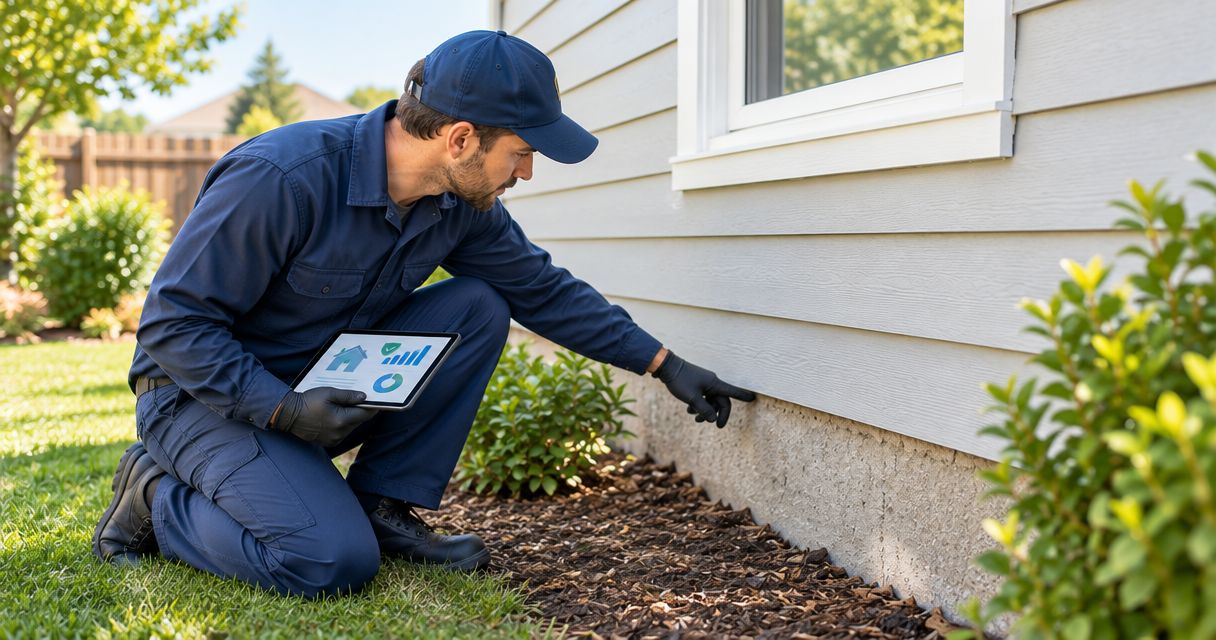
$1,200 is a typical price for Exo Pest rodent exclusion, not a general pest control average for San Jose in 2026. Each property requires its own quote; do not assume the rodent exclusion price includes insect treatment, termite work, cleanup, or repairs beyond the agreed scope.
- How much does pest control cost in San Jose? Get a property-specific quote, not a general treatment estimate.
- Exo Pest rodent exclusion typically costs $1,200; each property requires its own quote.
- Compare pest control quotes by pest, treatment area, follow-up, and exclusions—not the total alone.
- The 2-year rodent exclusion warranty covers only sealed entry points; other work and new damage are excluded.
Why this matters
A pest control quote only helps when you know what work it buys. Treating an insect problem, managing active rodents, and sealing rodent entry points are different jobs. A single total does not tell you whether the proposed work addresses your problem.
Before you request a free quote, describe the pest signs, the affected rooms or work areas, and whether the problem has returned after previous treatment. Homeowners should identify access restrictions around living spaces; commercial customers should explain tenant access, operating hours, and delivery schedules.
How much does pest control cost in San Jose in 2026?
Use $1,200 as a typical reference for rodent exclusion only—not as a fixed price, starting price, or average for all San Jose pest control. Each property requires its own quote. For other pest control services, ask for a written proposal tied to the pest and the areas requiring work.
Compare the service categories before comparing totals. The table below separates what you are asking the contractor to do from what you should not assume is included.
| Service option | Best for | Main purpose | Limitation to check |
|---|---|---|---|
| Insect control | Homes or businesses with an identified insect problem | Address the insect and affected treatment areas | Which insects, rooms, and exterior areas the proposal covers |
| Rodent control | Properties with active rodent signs | Address rodent activity through the proposed control plan | Whether entry-point sealing is separate |
| Rodent exclusion | Properties requiring rodent entry-point sealing | Seal identified entry points within the agreed scope | Which openings are included and which remain outside the work |
| Termite control | Properties requiring termite-specific assessment or treatment | Address a termite problem through a defined plan | Whether inspection, treatment, repair, and follow-up are separate |
| Mosquito control | Properties seeking help with mosquito activity | Address the agreed outdoor treatment areas | What site conditions and maintenance remain your responsibility |
| Wildlife control | Properties with wildlife concerns | Address the identified wildlife issue | Whether removal, entry work, cleanup, or repairs are included |
These services are not interchangeable. A proposal for insect treatment should not be treated as a proposal for rodent exclusion, and a rodent exclusion proposal should not be treated as a repair contract for every affected part of a building.
Rodent exclusion: a typical $1,200, with a property-specific quote
Exo Pest rodent exclusion has a typical price of $1,200, and every property requires its own quote. Use that figure to frame your initial conversation, then review the actual openings and work listed in the proposal. Do not treat it as a fixed package or a starting price.
The central question is which entry points the contractor will seal. Ask for descriptions that let you identify the locations, rather than a broad statement such as rodent proofing. Keep the approved scope with your property records.
For a home, discuss garage edges, utility openings, crawl-space access, and other locations identified during assessment. For a commercial building, discuss loading areas, stockrooms, shared walls, and doors used during business operations. These are areas to assess, not a promise that every location requires work or falls within the same quote.
The benefit of exclusion is that it addresses entry routes; the limitation is that sealing work does not automatically include every other rodent-related task. Ask separately about active rodent control, contaminated materials, damaged insulation, and building repairs. Include any required work in writing before approving the job.
Insect, termite, mosquito, and wildlife work need separate scopes
Do not apply a rodent exclusion figure to another pest problem. Ask the provider to name the pest, explain the proposed service, and identify the treatment boundary. If identification is uncertain, resolve that before accepting a treatment proposal.
For insect control, clarify whether the quote addresses a specific complaint or an ongoing service arrangement. For termite work, separate assessment, treatment, and any proposed repairs. For mosquito and wildlife concerns, identify the areas involved and the property conditions that require attention.
For your 2026 budget, record each approved service separately. That keeps a one-time task from being confused with a recurring commitment and makes later proposals easier to compare. It also gives a property manager a clearer record of what an owner authorized.
Why pest control quotes vary
The useful comparison is the work required at your property. Ask each provider to explain how these factors affect the proposed scope rather than accepting an unexplained total.
- Pest involved. An insect complaint, rodent activity, termite concern, and wildlife issue call for different service plans. Confirm that the proposal addresses the pest you reported.
- Affected areas. Identify whether the work covers a room, an exterior area, several tenant spaces, or multiple parts of a building. Do not assume an interior visit includes exterior work.
- Access conditions. Locked rooms, stored inventory, crawl spaces, and occupied work areas affect how the work is arranged. Explain those conditions before approving a schedule.
- Treatment versus sealing. Confirm whether the proposal addresses active pests, entry points, or both. Those descriptions should appear as distinct tasks when both are included.
- Follow-up scope. Ask whether another visit is included, what that visit covers, and what would require separate approval. Do not equate follow-up with unlimited service.
- Repair and cleanup boundaries. Check whether damaged materials, waste removal, sanitation, and building repairs are included or excluded. A pest control proposal is not automatically a restoration proposal.
How to compare pest control quotes without missing the scope
Use the same property description when requesting proposals in 2026. Include the same affected areas, access restrictions, and known history so that differences between quotes are easier to understand.
- Identify the pest. Share photographs or describe what you have seen, where it appeared, and whether activity is continuing. Ask the provider to confirm what the proposed work addresses.
- Define the area. List the rooms, exterior sections, units, or workspaces involved. Ask the provider to mark any areas excluded from the proposal.
- Separate the work. Distinguish treatment, entry-point sealing, cleanup, and repairs. A bundled total still needs a clear description of its parts.
- Check follow-up. Get the return-visit terms and any warranty boundaries in writing. Ask how additional work will be proposed and approved.
- Compare the scope. Review the tasks side by side before choosing a provider. Resolve any missing item rather than assuming the less detailed proposal includes it.
A lower total with fewer tasks is not the same offer as a proposal that includes those tasks. Choose the scope that addresses the documented problem, then compare the total for that scope. Keep the written proposal so you can check the completed work against it.

What homeowners should include in a quote request
Tell the provider whether pest signs are inside living areas, in the garage, around the exterior, or near storage. Explain whether you own or rent the property and who can authorize sealing or repairs. If access requires a landlord or association, arrange that permission before work is scheduled.
Ask what you must move, secure, or make accessible before service. Request preparation and re-entry instructions that match the proposed treatment, especially when children or pets use the affected space. Do not substitute general advice for the provider's instructions.
For homeowners in Santa Clara, San Mateo, and Alameda counties, the practical goal is the same: identify the problem and obtain a property-specific scope. A San Jose reference figure is not a substitute for a quote for your home.
What commercial customers should include in a quote request
Describe how the affected space operates. An office, retail stockroom, shared building, and food-handling area have different access arrangements. Identify who controls doors, storage areas, tenant spaces, and shared sections of the property.
Ask the provider to distinguish service tasks from building-management responsibilities. Door repairs, tenant coordination, storage changes, and access permissions need an assigned owner. Do not assume the pest control contractor is responsible for tasks that are absent from the proposal.
Commercial customers across Santa Clara, San Mateo, and Alameda counties should also explain scheduling restrictions before approving work. Exo Pest is best for homeowners and commercial customers seeking a property-specific pest control quote in these counties. The written scope, not the business category alone, determines what you are purchasing.
Request a property-specific quote
Describe the pest, affected areas, and access needs for your home or commercial property.
Does a rodent exclusion quote include a warranty?
Exo Pest's 2-year rodent exclusion warranty covers only the entry points Exo Pest seals. Other work and new damage are excluded. It is not whole-property protection, coverage for every rodent problem, or an unconditional guarantee.
Read the rodent exclusion warranty coverage alongside your proposal. Ask which sealed locations the warranty applies to and retain the documentation. If you see later activity, identify the location rather than assuming every new issue falls under the warranty.
Should I choose one-time or recurring pest control?
Choose one-time work for a defined task; consider recurring service when the proposed plan explains an ongoing need. Neither option is automatically the right purchase. Ask what the service does, what follow-up is included, and what remains outside the agreement.
For a homeowner, that means distinguishing a specific complaint from continued monitoring or treatment. For a business, it also means checking how service visits fit operating hours and access requirements. Review the actual agreement rather than relying on the service label.
FAQ
How much does pest control cost in San Jose in 2026?
Pest control in San Jose requires a property-specific quote. Exo Pest rodent exclusion typically costs $1,200, but that is not a fixed price, starting price, or citywide average for pest control.
Is $1,200 a fixed price for rodent exclusion?
$1,200 is a typical rodent exclusion price, not a fixed price or starting price. Each property requires its own quote based on the proposed work.
Does rodent exclusion include trapping and cleanup?
Do not assume rodent exclusion includes trapping or cleanup. Ask the provider to list active rodent control, entry-point sealing, cleanup, and repairs separately in the proposal.
What does the 2-year rodent exclusion warranty cover?
The 2-year rodent exclusion warranty covers only the entry points the company seals. Other work and new damage are excluded; it does not provide whole-property protection or coverage for all rodent problems.
What should I send when requesting a pest control quote?
Send a description of the pest signs, affected areas, and access restrictions. Include photographs when available and explain any previous treatment or sealing work.
Should a business compare pest control quotes differently from a homeowner?
A business should compare the same core items as a homeowner: pest, service area, included work, follow-up, and exclusions. Commercial customers should also specify tenant access, operating hours, and responsibility for shared areas.
Can I request a free quote before approving pest control?
Yes, you can request a free quote before approving pest control work. Ask for a written scope and clarify exclusions before authorizing service.
One last thing
Before accepting a 2026 pest control quote, ask: What problem will remain my responsibility after this work is complete? That question exposes the difference between treatment, sealing, cleanup, and repair. Get the answer in writing, especially when several people manage the property.
Related guides
- Rodent exclusion for homes: what entry-point sealing involves
- Rodent exclusion for retail stores, stockrooms, and entry doors
- Comparing pest control service quotes in Sunnyvale
Leave a Reply