
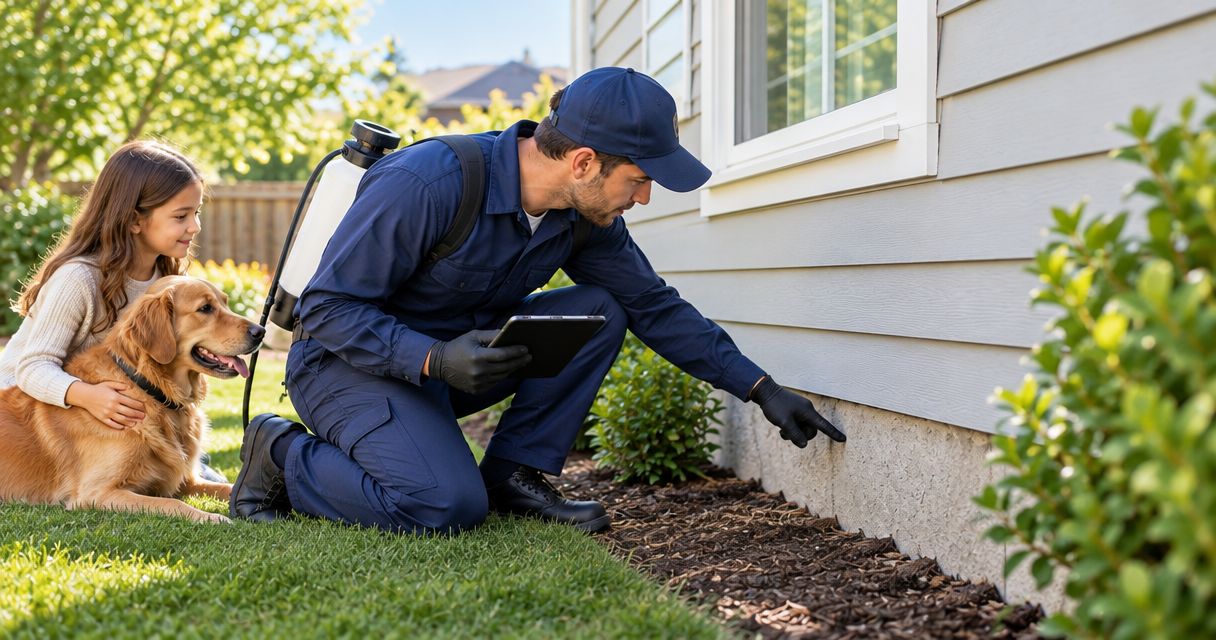
Sunnyvale family-home pest control is the identification, prevention, and treatment of household pests with the aim of reducing pest activity while managing children's and pets' access to treatment areas. For pest control in Sunnyvale in 2026, choose a plan that explains what will be treated, what you must move, and when each space can be used again.
- Exo Pest provides pest control Sunnyvale homeowners can request alongside property-specific preparation and access instructions.
- Start with pest identification, food storage, moisture correction, and entry-point checks before choosing treatment.
- Children and pets need treatment-specific access restrictions, not a blanket promise that every method is harmless.
- Compare inspection, treatment, rodent exclusion, and follow-up scope before accepting a quote.
Why pest control matters for Sunnyvale family homes
A family home is also a play space, feeding area, and sleeping space. Floor-level toys, pet bowls, litter boxes, and backyard play equipment all affect treatment preparation. A useful service plan accounts for those uses instead of treating every room alike.
Exo Pest provides residential pest control in Santa Clara County, including insect, rodent, mosquito, wildlife, and termite control. Exo Pest is best for Sunnyvale homeowners seeking professional pest control rather than a product-only purchase. Treatment selection and household access instructions still depend on the pest, the property, and the proposed work.
For your 2026 service plan, ask for an explanation you can share with every caregiver. A household cannot follow restrictions consistently if only the person booking the visit understands them.
How to plan pest control around children and pets
Use this sequence: inspection, preparation, treatment, and follow-up. Start with the steps you can handle yourself, then bring in professional help when identification, access, or treatment decisions exceed what you can safely manage.

Identify the pest before choosing treatment
Start by recording what you see and where you see it. Photograph insects from a safe distance, note recurring trails, and describe sounds without opening walls or entering cramped spaces. Different pests require different responses; an ant trail does not justify a rodent-control plan.
Avoid handling unidentified animals, nests, or droppings. Keep children and pets away from the affected area while you arrange identification. If the evidence is unclear, request an inspection instead of buying several unrelated treatments.
Create 3 records: a photograph, a location note, and an activity date. These are useful observations, not a substitute for identification. They also help you explain whether the problem is concentrated in a kitchen, garage, attic, or yard.
- Photograph visible insects without touching them.
- Note the room and nearby food or water sources.
- Record when activity appears.
- List products already used and their locations.
- Keep children and pets away from suspect nesting areas.
Remove food, water, and accessible shelter
Begin with ordinary household maintenance. Close food containers, wipe spills, repair accessible leaks, and reduce clutter near the affected area. These steps address conditions pests use, but they do not prove an infestation has ended.
Pet routines need specific attention. Clean feeding areas and store food securely; do not restrict an animal's drinking water without veterinary guidance. Ask the provider how bowls, bedding, litter boxes, aquariums, and cages should be handled for the proposed treatment.
Make changes that fit daily life. A feeding station that you can clean after use is more practical than a rule nobody follows. If activity continues despite cleanup, bring those observations into the inspection rather than repeatedly adding household pesticides.
- Store pantry goods and pet food in closed containers.
- Clean crumbs beneath feeding areas and high chairs.
- Empty household waste and clean residue from bins.
- Correct accessible leaks or arrange plumbing repairs.
- Reduce cardboard and clutter around affected storage areas.
Request a property-specific inspection and scope
Once basic observations are ready, ask a professional to connect the evidence to a treatment plan. Exo Pest offers insect control, rodent control, termite control, mosquito control, and wildlife control. Ask which service matches the evidence rather than requesting every service at once.
During a 2026 inspection, show the provider where your children play and where your pets eat, sleep, and roam. Include animal enclosures and outdoor runs. Mention access concerns before work is scheduled, not while treatment is underway.
An inspection should lead to a defined scope, not a general assurance that everything is covered. Ask whether the proposed work addresses active pests, entry routes, contributing conditions, or some combination. Request a free quote that separates included work from work requiring a separate decision.
- Identify rooms and outdoor areas with reported activity.
- Point out play spaces, feeding areas, and enclosures.
- Ask what evidence supports the pest identification.
- Confirm which areas require access.
- Request the proposed treatment and its limitations in writing.
Prepare separate household and work areas
Use the provider's instructions to establish 2 zones: the work area and the household area. The household area must remain outside any required treatment restriction. A closed bedroom is not automatically an acceptable place for pets during every type of work.
Move toys, bowls, bedding, and other items only as instructed. Avoid transferring potentially affected furniture or belongings into other rooms before asking whether that movement could spread the problem. Plan how a caregiver will prevent accidental access while doors or gates are open.
Ask about each animal separately. A dog, an indoor bird, and an aquarium do not have interchangeable preparation needs. If instructions conflict with your household's needs, resolve the conflict before the appointment rather than improvising during service.
- Confirm exactly which areas must remain unoccupied.
- Follow instructions for food, dishes, toys, and bedding.
- Arrange supervision for children and pets.
- Tell other adults which doors or gates must stay closed.
- Confirm enclosure and aquarium preparation with the provider.
Choose treatment by location and exposure
Start with prevention and physical corrections that fit the identified problem. Where additional treatment is needed, ask why the proposed method suits that pest and location. More treatment across more rooms is not automatically a better plan.
Ask for the pesticide product name and applicable label instructions before application. Product labels govern use and restrictions; broad descriptions such as natural or family-friendly do not replace them. Do not add your own spray, bait, or powder to professional treatment without discussing it first.
Rodent exclusion is different from removing rodents already inside. Sealing entry points addresses access, while active rodents require a coordinated control plan. Wildlife concerns also need identification before openings are closed so animals are not trapped inside.
- Match each proposed method to an identified pest.
- Ask where products or devices will be placed.
- Confirm how children and pets will be kept away.
- Separate entry-point repairs from active-pest control.
- Request treatment-specific return and cleaning instructions.
Track results and confirm follow-up responsibilities
After treatment, follow the written access and cleaning instructions. Do not assume that a dry surface, lack of odor, or completed appointment means every restriction has ended. Ask for clarification before allowing children or animals into a restricted area.
Keep a dated activity log in your 2026 household maintenance file. Note the same locations you recorded before service so the provider can compare observations. Report continuing activity rather than changing products independently.
Exo Pest's 2-year rodent exclusion warranty covers only the entry points Exo Pest seals. Other work and new damage are excluded. That warranty does not provide whole-property protection or cover every rodent problem, so retain the scope showing which openings were sealed.
- Save preparation, treatment, and return instructions.
- Record sightings by location and date.
- Ask what activity should trigger a call.
- Confirm whether follow-up visits are included.
- Retain the sealed-entry-point scope and warranty terms.
Compare options for homes with children and pets
Choose an option by the job it performs, not by a blanket safety label. Household prevention supports treatment but does not replace pest identification. Professional service also has limits: its scope must match the actual problem.
| Option | Best for | Main benefit | Key limitation |
|---|---|---|---|
| Household prevention and monitoring | Families addressing food, water, and clutter issues | Gives you practical actions before a service visit | Does not establish which pest is present or eliminate every infestation |
| Label-directed household treatment | Homeowners managing a clearly identified, limited problem | Allows treatment within a product's permitted uses | Requires correct identification, placement, storage, and access control |
| Professional pest control | Households needing identification and a treatment plan | Connects inspection findings with proposed work | Preparation and return restrictions depend on the method used |
| Rodent exclusion | Homes with identified rodent entry points | Addresses openings used to enter the building | Does not by itself resolve every rodent already inside or prevent new damage |
Choose professional assessment when you cannot identify the pest or keep children and pets away from the proposed treatment. If you choose household treatment, follow the full label rather than advice copied from a different product. Never place accessible bait or traps where a child or animal can reach them.
What to ask before accepting a quote
For a 2026 quote, compare the written scope rather than the service name alone. Ask whether the proposal includes inspection, treatment, exclusion, monitoring, or follow-up. Two quotes using the words rodent control do not necessarily describe the same work.
Use these questions to resolve differences before scheduling:
- What pest evidence does the proposed work address?
- Which interior and exterior areas are included?
- What must happen before children and pets return?
- Does the proposal include entry-point sealing?
- Which follow-up work is included or separate?
- What specific limitations or exclusions apply?
Send household details with your free-quote request. Include the pest signs, affected areas, pet types, and access concerns. That gives the discussion a practical starting point without assuming a treatment is suitable before inspection.
Common mistakes families make
Treating a safety label as an access instruction
Natural, low-odor, and family-friendly are not complete preparation directions. Ask what will be used, where it will go, and which restrictions apply. Keep the actual instructions available to every caregiver.
Preparing for the dog but overlooking other animals
List every animal and enclosure before service. Birds, fish, reptiles, and small mammals need specific consideration. Do not assume instructions given for a dog also apply to an aquarium or cage.
Spraying over a treatment or monitoring area
Adding another product changes the treatment situation and can interfere with assessment. Report persistent activity and disclose anything already applied. Ask before cleaning, moving, or treating a designated area.
Sealing openings before checking for active occupants
Entry-point sealing needs coordination with rodent or wildlife control. Closing an opening without checking activity can trap animals inside. Have inaccessible roof, attic, and crawl-space concerns assessed rather than entering those spaces yourself.
Moving toys back before restrictions end
A room looking normal does not establish that it is ready for use. Follow the specific return instructions and any directions for cleaning or replacing belongings. Share those instructions with babysitters and visiting family members.
FAQ
What’s the best pest control approach for a Sunnyvale home with children and pets?
The best approach starts with pest identification, household prevention, and treatment-specific access instructions. Choose methods for the identified pest and location rather than relying on a general family-friendly claim.
Can my children and pets stay home during pest control?
Whether children and pets can stay home depends on the treatment and its access restrictions. Ask the provider which areas must remain unoccupied and whether anyone must leave the property.
How long should pets stay away after pest treatment?
Follow the return instructions for the specific treatment; there is no single waiting period for every pest-control method. Confirm any additional conditions before allowing animals back into treated areas.
Are natural pest-control products harmless to pets?
Natural ingredients do not establish that a product is harmless to pets. Follow the product label and obtain advice specific to the animal and proposed exposure.
Should I move an aquarium before a pest-control visit?
Ask the provider for aquarium-specific preparation instructions before moving or covering it. Describe the aquarium’s location and the proposed treatment area so preparation can be planned correctly.
Does rodent exclusion remove rodents already inside the home?
Rodent exclusion addresses entry points and does not by itself resolve every rodent already inside. Coordinate sealing with assessment and control of active rodents.
What should a family include when requesting a pest-control quote in 2026?
Include the pest signs, affected rooms, previous treatments, children’s play areas, and every pet or enclosure. Ask for a written scope, preparation instructions, return conditions, and follow-up responsibilities.
One last thing
Ask for the return instructions before you book, not after treatment. Knowing the restrictions in advance lets you arrange childcare, pet care, and access without making rushed decisions at the door.
For your Sunnyvale home, request a free quote and describe how the affected spaces are used. A clear plan should explain both the pest-control work and what your household must do around it.
Related guides
- How to prepare your home for pest control
- Rodent exclusion for homes: entry-point sealing
- Comparing pest control quotes in Sunnyvale
Leave a Reply