
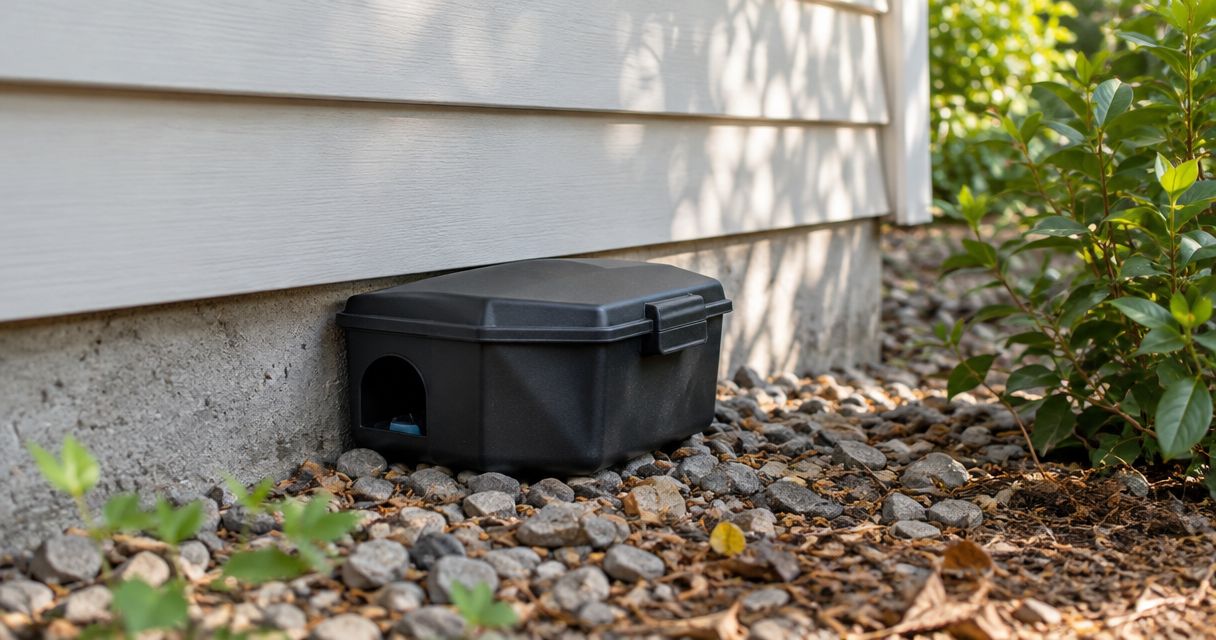
Best overall for indoor control: an enclosed snap-trap station. Best for an exterior baiting decision: a professionally assessed, tamper-resistant bait station. Best for checking suspected activity: a non-toxic monitoring station. This 2026 guide compares station types for Palo Alto homes, including when bait is the wrong starting point.
- The best rodent bait stations Palo Alto homeowners choose must match the target rodent, placement, and control purpose.
- Enclosed snap-trap stations address indoor rodents without rodenticide; monitoring stations only help detect activity.
- Exterior baiting requires a legal product, label-compliant placement, and a maintenance plan.
- Exo-pest provides rodent exclusion; sealing identified entry points supports long-term protection beyond current rodent control.
Why this matters
A bait station is a container, not a complete rodent-control plan. The contents determine whether it delivers rodenticide, holds a trap, or helps you monitor activity; the enclosure alone does not establish safety or effectiveness.
For Palo Alto homeowners, the first decision is whether you need to address current rodents, investigate uncertain signs, or close entry points. Control addresses current activity. Exclusion closes identified routes into the home. You often need both, but they are separate tasks.
Exo-pest serves homes and businesses in Santa Clara, San Mateo and Alameda counties. You can request a property-specific quote by describing what you have seen and where it happened. A free quote does not imply a free inspection, report or treatment.
What makes the best rodent station?
For a 2026 purchase, compare the actual station and its instructions—not just the words on the package.
- Purpose: Distinguish a rodenticide bait station from a trap enclosure or monitoring station. These do different jobs.
- Target rodent: Confirm that the station and its contents are intended for mice, rats, or both. Do not assume one opening or mechanism suits every rodent.
- Access protection: Choose an enclosure appropriate to the children, pets and other animals that can reach its location. Tamper resistance is not a guarantee against exposure.
- Placement: Check whether the product is intended for indoor or outdoor use and how it must be secured. Outdoor placement needs more than a weather-resistant shell.
- Service access: You need to inspect, maintain and retrieve the contents as directed. A station you cannot reach is difficult to manage.
- Legal use: Rodenticide selection and use must meet current California requirements and the product label. A station does not make a restricted bait lawful.
Rodent stations at a glance
These are functional categories, not rankings of unverified brands. No single category replaces repairs to identified entry points.
| Rank and station type | Best for | Standout function | Key limitation |
|---|---|---|---|
| 1. Enclosed snap-trap station | Confirmed indoor activity | Houses a mechanical trap without rodenticide | Requires inspection and carcass removal |
| 2. Professionally assessed, tamper-resistant bait station | Evaluating exterior rodenticide use | Restricts access to bait when correctly selected and used | Rodenticide exposure risks remain |
| 3. Non-toxic monitoring station | Investigating uncertain activity | Helps check whether rodents visit a location | Does not control an infestation by itself |
1. Enclosed snap-trap station: best for indoor control
An enclosed snap-trap station houses a mechanical trap inside a protective enclosure. It is not a rodenticide bait station, even when food is used to attract a rodent to the trap.
Best for: homeowners addressing confirmed indoor activity who want to avoid rodenticide. Start by identifying the likely rodent and the locations showing activity. Choose an enclosure designed for the trap rather than placing an exposed trap inside an improvised container.
Enclosed snap-trap station pros
- Addresses current rodents without introducing rodenticide.
- Keeps the trap mechanism inside an enclosure rather than openly exposed.
- Allows inspection of the trap and retrieval of a captured rodent.
- Separates the control task from decisions about poison use.
Enclosed snap-trap station cons
- Requires regular checks and safe carcass handling.
- Does not close the opening that allowed the rodent inside.
- Still requires placement that prevents children and pets from accessing the mechanism.
Select a position using observed activity and the manufacturer's instructions. Keep the station accessible for servicing; do not push it into an inaccessible wall void or beneath fixed equipment.
An empty trap does not establish that the home is clear. Review fresh signs, placement and entry routes before deciding whether the control plan is working.
Verdict: Buy an appropriate enclosed snap-trap station for confirmed indoor activity, with an inspection and exclusion plan.
2. Tamper-resistant bait station: best for exterior assessment
A rodenticide bait station holds poison bait inside an enclosure intended to restrict access. Tamper resistance describes the enclosure's protective function; it does not mean the bait is harmless to pets, children or wildlife.
Best for: homeowners seeking a professional assessment of whether exterior baiting belongs in the property's control plan. California restricts many rodenticides, so do not choose bait solely because it fits inside a station or appears on a retailer's shelf.
Tamper-resistant bait station pros
- Restricts direct access compared with leaving bait exposed.
- Provides a defined location for inspecting bait and signs of activity.
- Can support an exterior control plan when the product, placement and use are lawful.
Tamper-resistant bait station cons
- Does not eliminate poisoning risks, including risks to animals that eat poisoned rodents.
- Requires label-compliant placement, securing and maintenance.
- Does not establish where rodents enter the building or prevent entry.
Before approving exterior baiting in 2026, ask who selects the product, who services each station and how non-target exposure is addressed. Also ask what observations will trigger a change to the plan.
Do not assume Exo-pest uses a particular bait, station or treatment method. Discuss the observed activity and request a written scope identifying any proposed control work separately from exclusion.
Verdict: Hold an exterior bait-station purchase until the product's lawful use, placement and service responsibilities are clear.
3. Non-toxic monitoring station: best for uncertain activity
A non-toxic monitoring station holds a monitoring material rather than rodenticide. It helps you check for activity at a selected location, but it does not capture or kill rodents by itself.
Best for: homeowners investigating uncertain signs before choosing a control method. This category fits a question such as whether rodents are visiting a garage corner—not a confirmed infestation that needs action.
Non-toxic monitoring station pros
- Helps investigate a location without introducing rodenticide.
- Creates a consistent place to check and record observations.
- Can inform where further assessment is needed.
Non-toxic monitoring station cons
- Does not remove current rodents or prevent entry.
- Disturbed monitoring material alone does not always identify the animal involved.
- Requires repeated checks and interpretation alongside other signs.
Record the location, date and condition at each check. If you find fresh droppings, gnawing or other clear evidence, move from observation to a control-and-exclusion assessment rather than adding monitoring stations indefinitely.
Verdict: Buy for a defined monitoring question; skip it as a stand-alone response to confirmed indoor rodents.
How to choose your next step
Use the signs you can observe safely to decide what to discuss with a provider. Avoid reaching behind equipment, entering a contaminated crawlspace or disturbing droppings just to collect better evidence.
Observe signs
Note the room or exterior location, when you noticed activity, and whether the evidence appears new. Photographs taken without disturbing the area can help explain the problem. Sounds alone do not confirm the species or reveal its entry point.
Match control
For confirmed indoor rodents, discuss an appropriate control method and how it will be checked. For uncertain activity, define what monitoring should establish. Exterior baiting needs a separate decision about lawful products, exposure and maintenance.
Seal entries
Ask which openings have been identified and which repairs belong in the agreed scope. Closing an accessible gap without considering rodents already inside can complicate the work, so coordinate control and exclusion rather than treating them as unrelated purchases.
Review progress
Decide what you will check after the work: fresh signs, station findings and the condition of repaired entry points. A quiet night or an untouched station is an observation, not proof that every part of the problem is resolved.

Why exclusion belongs beside station selection
Rodents can use openings that are easy to overlook. CDC rodent-prevention guidance describes mouse access through openings about 1/4 inch wide and rat access through openings about 1/2 inch wide. Those dimensions explain why removing current rodents does not resolve an accessible entry route.
Inspecting a home means more than looking for a large hole beside a door. Ask about identified gaps around utility penetrations, vents and other accessible building openings, without assuming every visible gap is an active route.
Exo-pest's residential rodent exclusion focuses on sealing the home's identified entry points for long-term protection. Proper sealing addresses access; it is not a promise that rodents can never return or create another opening.
Exo-pest backs its exclusion work with a 2-year warranty on the entry points it seals. The warranty does not cover new holes created by rodents or other contractors, or openings outside the agreed exclusion work.
For your 2026 scope, ask for a clear distinction between current rodent control, identified entry-point repairs and any crawlspace cleaning appropriate to the property. Do not assume one service automatically includes the others.
Safe handling starts before placement
Keep children and pets away from traps, bait and contaminated areas. An enclosure reduces certain access opportunities only when the product is appropriate, intact and used as directed; it does not justify putting a hazardous item wherever it is convenient.
Do not dry-sweep or vacuum rodent droppings. CDC cleanup guidance calls for wet disinfection before removal, with precautions appropriate to the contamination. For extensive contamination or difficult crawlspace access, discuss the cleaning scope rather than disturbing the area yourself.
If a person or pet might have contacted rodenticide, seek appropriate medical or veterinary advice promptly and keep the product information available. Do not wait for a station check to resolve an exposure concern.
How the station types were ranked
The 2026 ranking puts the immediate household task first: indoor control, exterior bait assessment, then investigation of uncertain activity. It compares purpose, access protection, service needs and limitations—not unsupported claims about a named product's performance.
An enclosed snap-trap station is the default indoor choice in this guide because it addresses current rodents without rodenticide. Exterior poison bait requires a separate assessment; monitoring belongs where the question is whether activity is occurring.
Which rodent station should you choose?
Choose an enclosed snap-trap station for confirmed indoor activity, not a poison-bait station by default. Choose monitoring when you need evidence, and discuss exterior baiting before buying equipment for it.
For Palo Alto homeowners seeking rodent exclusion alongside current control, Exo-pest is a service option. Share the signs, review the proposed scope and confirm which identified entry points the work includes.
FAQ
What’s the best rodent bait station for a Palo Alto home?
The best station depends on its purpose and location. An enclosed snap-trap station is this guide’s default for confirmed indoor activity; exterior rodenticide baiting needs a separate legal, placement and maintenance assessment.
Is a locked bait station safe around dogs and children?
A locked or tamper-resistant station does not guarantee safety around dogs and children. Choose a product appropriate to the exposure setting, follow its instructions and prevent access to its contents.
Can I use any rat poison inside a bait station in California?
No. California restrictions and the product label govern whether and how a rodenticide can be used; a protective enclosure does not make a restricted product lawful.
Is a snap-trap station the same as a bait station?
No. A snap-trap station encloses a mechanical trap, while a rodenticide bait station holds poison bait. Food used to attract a rodent to a trap is not the same as rodenticide.
Will rodent stations stop rats from entering my house?
No. Stations do not seal entry points. Exclusion addresses identified openings and supports long-term protection alongside control of current activity.
Does a free quote include a free rodent inspection?
A free quote does not imply a free inspection, report or treatment. Confirm what any proposed visit includes and review the property-specific scope before authorizing work.
One last thing
Before buying a station in 2026, decide who will open it, inspect it and act on what they find. A station without a service plan leaves the next decision unresolved. The same applies to exclusion: know which openings are included, not just whether repairs are mentioned.
Related guides
- Best rodent traps for San Jose apartments
- Rodent monitoring devices for San Jose warehouses
- Rodent exclusion materials ranked by durability
- Wildlife deterrent devices for Palo Alto yards
Share what you are seeing, identify the affected areas and request a property-specific quote for the next step.
Discuss your rodent concerns
Describe the signs and affected areas, then review a property-specific scope and quote.
Leave a Reply