
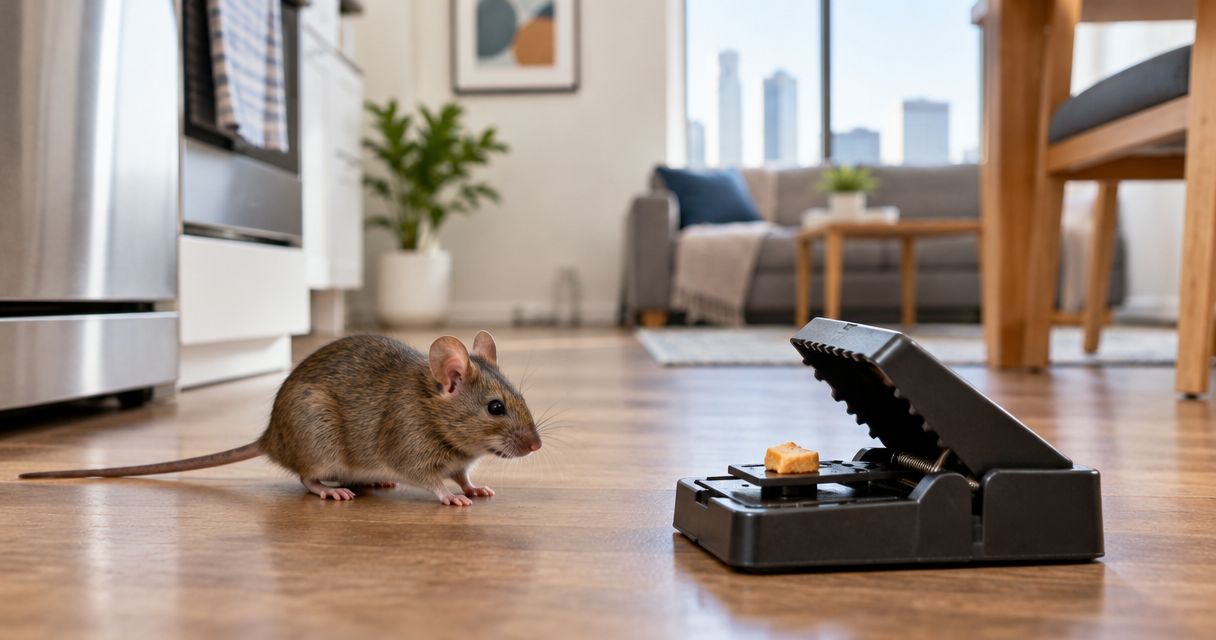
Best overall for suspected mice: an enclosed mouse snap trap. Best for confirmed rats: a rat snap trap inside a suitable protective station. Best for dry, accessible placement: an electronic mouse trap. Best for a restricted utility area: a standard mouse snap trap. This 2026 guide compares apartment trapping options and explains when you need building-level rodent control instead of another trap.
- The best rodent traps for San Jose apartments match the rodent, placement, and household access risks.
- Enclosed mouse snap traps are the default for suspected mice, not a substitute for rat-sized equipment.
- Exo Pest provides rodent exclusion; ask for a property-specific scope addressing identified entry points.
- Apartment trapping needs landlord coordination when activity involves shared walls, utility routes, or common areas.
Why this matters
A trap addresses a rodent already using your apartment. It does not close the opening that allowed access. In a shared building, that distinction matters: catching an animal inside your kitchen does not establish that the building's entry problem has ended.
Separate current rodent control from entry-point exclusion. Exo Pest's San Jose rodent control guide explains the broader service decision. For an apartment, start by reporting observed signs and identifying who can authorize work inside the unit and in shared spaces.
What makes the best apartment rodent trap?
For this 2026 shortlist, choose equipment using these criteria rather than packaging claims:
- Correct rodent size: Mouse and rat traps are not interchangeable. Identify the likely animal before choosing equipment.
- Protected placement: Children, pets, visitors, and maintenance staff should not have access to the trigger or capture mechanism.
- Checkable location: You need to reach the trap without moving heavy appliances or entering an unsafe space.
- Clear instructions: Follow the manufacturer's directions for setup, permitted locations, checking, and disposal.
- Building fit: Keep equipment inside authorized areas and coordinate any shared-space placement with property management.
- Ongoing access control: Pair trapping with a plan to identify entry points rather than treating each capture as the end of the problem.
Apartment rodent traps at a glance
| Trap type | Best for | Standout feature | Key limitation |
|---|---|---|---|
| Enclosed mouse snap trap | Suspected mice in occupied rooms | Housing limits direct access to the mechanism | An enclosure is not automatically childproof or petproof |
| Rat snap trap in a protective station | Confirmed rats where protected placement is possible | Rat-sized mechanism with a separate access barrier | Requires a compatible station and careful siting |
| Electronic mouse trap | Dry, accessible locations with routine checks | Capture mechanism sits inside the device | Power and location restrictions add maintenance |
| Standard mouse snap trap | Restricted utility areas | Simple mechanism with direct visual checking | Exposed mechanism needs controlled access |
These are equipment categories, not claims about a particular model. Confirm each product's intended species, location restrictions, and protective features before use.
1. Enclosed mouse snap traps: best for occupied apartment rooms
An enclosed mouse snap trap places a mouse-sized snap mechanism inside a housing. It is the first option to consider when signs point to mice and the trap must sit in an occupied apartment.
The housing reduces direct access compared with an exposed mechanism. It does not make every location appropriate: a curious pet can still investigate, move, or damage equipment.
Enclosed mouse snap trap pros:
- Housing separates the mechanism from casual contact.
- Mouse-specific equipment keeps species selection explicit.
- The enclosed format suits locations where an exposed mechanism is inappropriate.
Enclosed mouse snap trap cons:
- A mouse-sized mechanism is not suitable for rats.
- Housing does not replace access control or routine checks.
- Some designs make the capture area less visible.
Best for: Suspected mice in occupied rooms where you can prevent children and pets from reaching the equipment.
Choose an accessible location consistent with the instructions. Do not push the trap into a gap that prevents checking or retrieval. Verdict: Buy for mouse activity when protected placement is possible.
2. Secured rat snap traps: best for confirmed rat activity
A rat snap trap uses a mechanism sized for rats. A suitable protective station adds a barrier around that mechanism; the station and trap must be compatible and used according to their instructions.
This option belongs on the shortlist only after the likely rodent has been identified. If you cannot tell whether the signs indicate rats or mice, request help before selecting equipment.
Secured rat snap trap pros:
- Uses equipment intended for rats rather than mice.
- A compatible station restricts direct access to the mechanism.
- Separates trap selection from the question of protective housing.
Secured rat snap trap cons:
- The larger mechanism creates an injury risk if accessible.
- A station requires appropriate positioning and access control.
- Equipment inside an apartment does not address shared building routes.
Best for: Confirmed rats where a responsible adult or service provider can arrange protected placement and regular checks.
Do not place rat equipment in a hallway, shared laundry room, or other common area without authorization. Verdict: Buy only after confirming rat activity and a suitable location.
3. Electronic mouse traps: best for dry, accessible locations
Electronic mouse traps use an electrically powered capture mechanism inside a housing. Their suitability depends on the manufacturer's location restrictions, power requirements, and instructions for checking and emptying.
Choose this category for a dry location you can reach easily. Do not assume that an electronic design is suitable for damp areas or that an indicator replaces physical checks.
Electronic mouse trap pros:
- The capture mechanism sits inside the device.
- Housing provides separation from direct contact with the mechanism.
- The device offers an alternative to manually setting a snap bar.
Electronic mouse trap cons:
- Power requirements add a maintenance task.
- Moisture restrictions limit placement.
- Mouse models are not substitutes for rat equipment.
Best for: Mouse activity in dry, accessible locations where you can maintain the power supply and check the device as directed.
Read the disposal instructions before setting the trap, not after a capture. Verdict: Buy when the location and maintenance requirements fit your apartment.
4. Standard mouse snap traps: best for restricted utility areas
A standard mouse snap trap leaves its mechanism exposed. Its simple layout makes the mechanism visible, but that same exposure makes placement the deciding issue in an apartment.
Consider this option only where household access is reliably controlled. Behind furniture is not automatically protected, especially if a pet can reach the space or maintenance staff need access.
Standard mouse snap trap pros:
- The mechanism is directly visible during checks.
- Setup does not require an electrical power supply.
- The simple format avoids maintaining a powered device.
Standard mouse snap trap cons:
- The exposed mechanism presents a contact hazard.
- Restricted placement is harder in a busy household.
- Moving appliances to check traps creates an impractical routine.
Best for: Mouse activity in a restricted utility area that an authorized adult can check without disturbing equipment or stored materials.
Do not use open placement merely because it is convenient to set. The location must remain appropriate afterward. Verdict: Buy only for reliably restricted areas; otherwise choose an enclosed option.
How these options rank in 2026
The ranking puts species fit and protected placement ahead of convenience features. Enclosed mouse snap traps lead for occupied rooms; rat-sized equipment takes priority when rats are confirmed. Electronic devices serve dry, accessible locations, while exposed mouse snap traps belong in restricted spaces.
This is a suitability ranking, not a measured capture-rate comparison. No trap category removes the need to check equipment, manage food access, and address identified entry points.
Set up a plan before setting a trap
Use this sequence to keep the response organized. If you cannot complete a step safely, leave that task to property management or a qualified service provider.
- Record signs. Note the room, date, and what you observed. Photograph signs from a safe position without handling droppings or nesting material.
- Notify management. Report the activity in writing and ask who will coordinate access, service, and shared-area checks.
- Confirm equipment. Match the trap to the likely rodent and follow the product's placement instructions.
- Check equipment. Inspect traps daily, following manufacturer instructions for safe handling and disposal.
- Review entry points. Ask which openings were identified, which work is authorized, and how that work will be documented.

Keep 1 shared activity log for your apartment so household members do not duplicate reports or move equipment without telling each other. Record observations separately from assumptions: scratching is an observation; a confirmed species requires more evidence.
Protect pets without substituting another product
A trap enclosure and a pet-safe placement plan are different things. Keep pets away from all trapping equipment, and do not assume a housing prevents chewing, tipping, or contact with captured rodents.
Adding a spray introduces a separate exposure question. Rat repellent safety around pets depends on the specific formulation, label directions, application location, and potential animal contact—not on the word repellent alone. Do not treat a spray as a substitute for controlling access to traps or addressing entry points.
For a household with pets, tell the service provider which animals live there and where they spend time. Ask for a placement plan that accounts for those areas rather than relying on a general reassurance about the equipment.
Coordinate control and exclusion with the building
Apartment rodent work involves 2 separate tasks: addressing current activity and reducing access through identified openings. The person arranging traps inside your unit does not necessarily have authorization to alter shared walls, utility penetrations, exterior openings, or common areas.
Exo Pest is the service option for San Jose apartment decision-makers who need rodent control and identified entry-point work scoped separately. Share the signs, the affected rooms, and any access restrictions so the quote addresses the property rather than a generic apartment scenario.
Properly sealing a home's identified entry points supports long-term protection. It is not a promise that rodents can never return, and it should not be described as one.
Exo Pest Solutions backs its exclusion work with a 2-year warranty on the entry points it seals. The warranty does not cover new holes created by rodents or other contractors, or openings outside the agreed exclusion work.
Before approving work, ask for the agreed openings, access needs, and exclusions in writing. If crawlspace access or cleaning is relevant, request a separate description of work appropriate to that space rather than assuming it comes with trapping.
Which apartment rodent trap should you choose?
For 2026, choose an enclosed mouse snap trap as the default only when the signs point to mice. Choose protected rat-sized equipment for confirmed rats, an electronic mouse trap for a suitable dry location, or an exposed mouse snap trap only where access is reliably restricted.
If the species is uncertain, signs recur, or activity involves shared spaces, stop treating the decision as a shopping problem. Request a property-specific scope from Exo Pest and coordinate the building's response with management.
FAQ
What’s the best rodent trap for a San Jose apartment in 2026?
An enclosed mouse snap trap is the default for suspected mice when protected placement is possible. Confirmed rats require rat-sized equipment, and every trap needs an accessible checking location.
Are enclosed mouse traps safe around cats and dogs?
An enclosure does not make a mouse trap automatically safe around pets. Prevent pet access and follow the specific product’s placement and handling instructions.
Should I tell my landlord before setting rodent traps?
Notify property management promptly and coordinate any service or shared-area placement. Ask who can authorize entry-point work and access outside your apartment.
Is an electronic mouse trap better than a snap trap?
An electronic mouse trap fits dry, accessible locations where its power and maintenance requirements can be met. A snap trap avoids electrical power requirements but still needs protected placement.
How often should I check rodent traps in my apartment?
Check rodent traps daily and follow the manufacturer’s handling and disposal instructions. Choose locations you can reach safely without moving heavy appliances.
Will catching a mouse stop more mice from entering?
Catching a mouse does not seal the opening it used. Ask for identified entry points to be assessed and for authorized exclusion work to be scoped separately.
Does a free quote include a free inspection or treatment?
A free quote does not imply a free inspection, report, or treatment. Confirm the scope and any applicable charges before authorizing a visit or work.
One last thing
The most useful question after a capture is not which trap to buy next. It is which identified opening still needs attention. Keep that question in the service conversation even when visible activity stops.
Use the contact page to share what you are seeing and request a property-specific quote. Include your San Jose location, affected rooms, pet concerns, and whether property management will coordinate access.
Leave a Reply